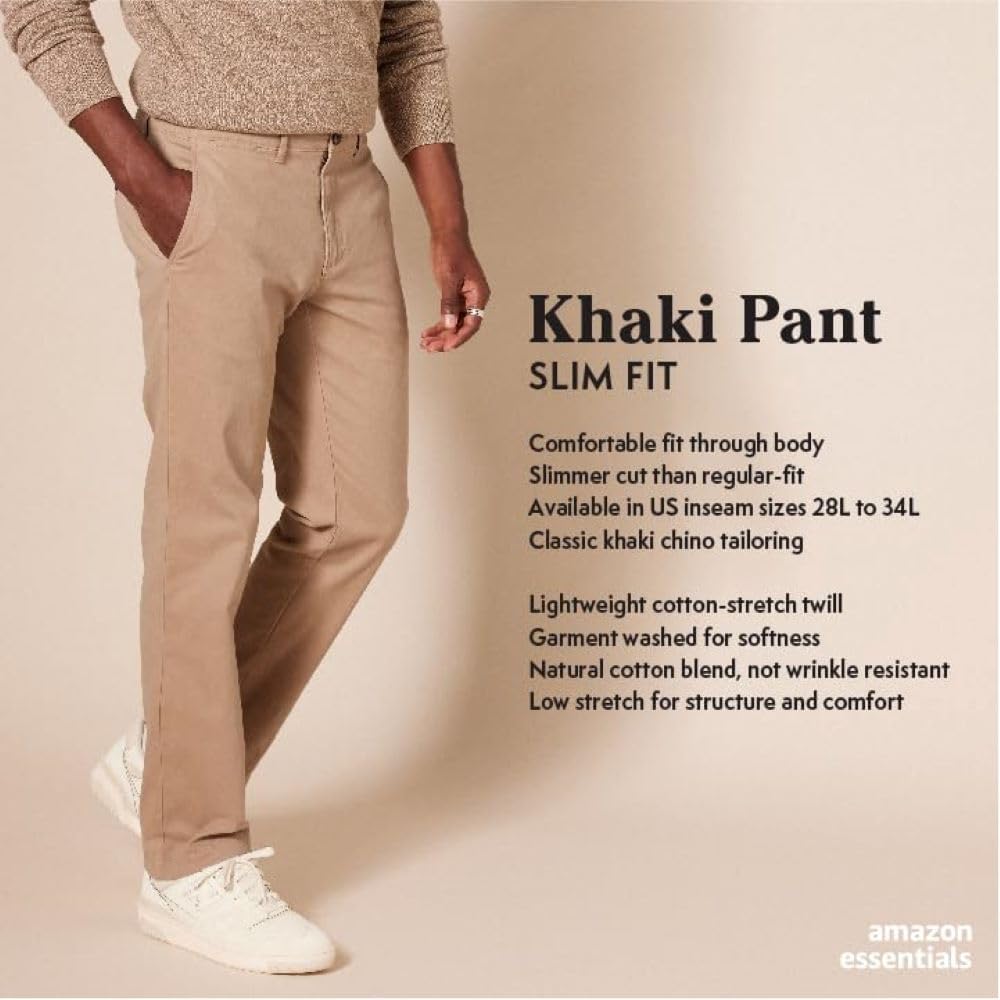
If you’ve ever ordered a pair of chinos online and spent the first five minutes after unboxing them wondering whether you grabbed the wrong package, you’re not imagining things. Color accuracy — how closely the shade you see in a product photo matches the physical fabric in your hands — is one of the most persistent and least-discussed problems in workwear shopping. Monitor calibration, studio lighting, and product photography choices all conspire to shift how a color reads on screen. The result: olive that arrives looking almost army-green, “white” that turns out to be a warm cream, and black that starts fading by the third wash. This article maps the specific, documented patterns across the major chino brands at the accessible-to-mid-tier range, so you can make a better call before you buy — and know exactly what you’re managing after.
The Direction of the Error Matters More Than You’d Think
Most color-accuracy problems in chinos don’t fall randomly. They skew in predictable directions, and once you know which way a brand’s photography leans, you can compensate at the point of purchase.
The clearest example of opposing errors within a single brand family: Amazon Essentials slim-fit chinos in olive photograph lighter than the actual garment — reviewers report the pants arrive notably darker and more saturated than the listing image suggests. The same brand’s classic-fit gray runs in the opposite direction, arriving lighter than the listing makes it look. That’s not a quality problem; it’s a photography inconsistency that creates genuine decision-making risk when you’re trying to match a specific suit jacket or coordinate with the rest of your wardrobe. Across aggregated reviews, this pattern holds with enough consistency that it’s worth treating as a baseline expectation: slim silhouettes in earth tones photograph light, while relaxed silhouettes in neutrals often photograph darker.
Wirecutter’s chino roundup notes that color rendering is one of the most common failure modes in online workwear buying, and that the problem compounds when shoppers are matching across multiple items from different brands — where each brand’s photography calibration is its own variable.
The practical takeaway for someone mid-decision: if you’re buying olive, order assuming the physical garment will read about one full shade deeper than the listing. If you’re buying a gray in a classic or relaxed cut, factor in the possibility that it will arrive lighter and more washed-out than expected. That affects whether you’re sizing the color for casual Fridays or for client-facing meetings where your outfit needs to read polished from across a conference table.
Black Is Its Own Problem Category
Black chinos present a two-part challenge: the photography problem (black fabrics often render as charcoal or dark navy under certain lighting rigs, and vice versa) and the wash-fade problem, which is documented consistently enough to warrant its own decision framework.
A reviewer who purchased Gap, Amazon Essentials, and Dockers black chinos simultaneously and wore and washed all three over multiple cycles found a clear hierarchy: Gap held the truest black over time, Amazon Essentials landed in the middle ground, and Dockers faded fastest. That’s one data point, not a clinical trial, but the pattern aligns with what Esquire’s style desk has noted about cotton-blend chinos — that the weight and weave density of the fabric correlates with how long dye bonds hold under repeated laundering. Dockers’ black chinos tend to run on the lighter construction side, which may explain the accelerated fade.
The outlier worth knowing: Levi’s Mineral Black earns specific, repeated praise in owner reviews for color retention after washing — and the specificity of that praise is unusual enough to flag. Most reviewers don’t comment on wash performance unless it’s surprisingly good or surprisingly bad. Mineral Black, which reads slightly different from a standard jet black (more dimensional, with a very faint cool-blue depth), appears to hold that character well past the initial wear-in period. If black retention is your primary concern — say, you’re building a pair of black chinos into a rotation that includes dark-wash denim and you need all three to read as a cohesive dark palette — Levi’s Mineral Black is the one reviewers consistently return to.
By the numbers:
- Gap black chinos: best long-term black retention in the simultaneous comparison
- Amazon Essentials black: mid-tier fade rate; acceptable for casual rotation
- Dockers black: fastest visible fade, often by wash 4–6
- Levi’s Mineral Black: strongest wash-retention praise in aggregated owner reviews
Khaki and White: The Subtle Shade Trap
The off-white and khaki segment is where color-accuracy problems become socially consequential rather than just aesthetically annoying. A pair of pants that arrives darker than expected is a minor inconvenience. A pair of pants you wear to a formal presentation thinking they’re white, only to notice they read as warm cream under fluorescent light — that’s a different category of problem.
The Haggar Cool 18 Pro in white is a well-documented case. Owners note consistently that the pants read as white in isolation — sitting on a hanger in your closet, or photographed on a neutral background. But place them next to a genuinely bright white shirt or a crisp white blouse, and they skew perceptibly yellow. Reviewed.com’s workwear coverage highlights exactly this kind of undertone mismatch as a recurring hazard in “white” casual trousers, where the dye or finishing process produces a warm base that product photography rarely captures accurately. For business-casual environments where you’re not standing next to other white garments, the Haggar Cool 18 Pro white reads fine. For formal-adjacent settings — a summer client dinner, a gallery opening, a high-stakes presentation — the undertone matters and you should know it going in.
On the khaki side, Dockers’ “New British Khaki” is worth flagging for a different reason: batch inconsistency. Reviewers who purchased the same style across multiple orders report visible color variation between shipments — some batches running warmer and more golden, others more muted and gray-adjacent. This is a dye-lot issue (dye lots are production batches; small variations in dye concentration produce slightly different final shades), and it’s significant if you’re buying two pairs to rotate or replacing a pair you already love. Esquire’s coverage of workwear quality control specifically calls out batch inconsistency as one of the harder-to-detect risks in value-tier chino buying, precisely because it only surfaces once you have two pairs side by side.
How to Compensate Before You Buy
The color accuracy problem is real and consistent, but it’s manageable once you know the system. Here’s the decision framework built from the patterns above:
If you’re buying olive or earth-tone chinos: Expect the physical garment to arrive darker and more saturated than the listing image, particularly in slim cuts. If the listing shows a muted, almost dusty olive and you want something that reads as proper army green, you may already have it — but verify by searching for buyer-uploaded photos in reviews, which are photographed on real devices under real lighting rather than studio rigs.
If you’re buying black chinos for any setting beyond casual Friday: Factor wash-fade into the purchase decision before you buy, not after. Gap holds black longest in the accessible tier. Levi’s Mineral Black is the strongest performer for retention at a moderate price. If you’re committing to Dockers black, plan to wash them inside-out in cold water and avoid the dryer — GQ’s care guide specifically recommends this protocol for black cotton-blend trousers.
If you’re buying white or near-white chinos for a formal setting: Never evaluate the color in isolation. Order early enough to receive the pants and hold them against your intended top or jacket under the actual lighting of the event venue or office. The Haggar Cool 18 Pro is an excellent pant in many respects, but its white runs warm; if you need optically pure white, that’s a constraint worth knowing.
If you’re buying Dockers “New British Khaki” to replace an existing pair: Photo-compare your existing pair against buyer-uploaded review photos to gauge current dye-lot range. The variation across batches is real enough that “same style, same colorway” is not a guarantee of “same shade.”
Frequently Asked Questions
Why do black chinos fade so fast, and which brands hold black color longest? Black dye is chemically harder to bond permanently to cotton fibers than most other colors, and the mechanical action of washing — combined with heat and detergent — breaks those bonds over time. In the accessible chino tier, Gap and Levi’s (specifically the Mineral Black colorway) hold up best across aggregated owner reviews. Dockers black fades most visibly, often showing noticeable lightening within the first half-dozen washes.
Is “New British Khaki” the same shade across different Dockers fits? Not consistently. Reviewers who’ve purchased the same colorway across multiple orders and different fits report visible batch variation — some running warmer and more golden, others cooler and more gray. If you’re trying to match an existing pair, treat each new purchase as potentially a different shade.
The olive chinos look light on my screen — will they actually be darker in person? In most cases, yes. Slim-cut olive chinos in particular tend to photograph lighter than the physical garment. Studio lighting flattens the depth of saturated earth tones. Buyer-uploaded photos in the reviews section are a more reliable reference than the hero image.
How do I wash black dress pants to slow down fading? Wash inside-out in cold water on a gentle cycle. Use a detergent formulated for darks (several mainstream brands make these). Avoid the dryer entirely, or use the lowest heat setting. GQ’s care guide for dark trousers consistently recommends air drying as the single highest-impact preservation step.
Is the Haggar Cool 18 Pro white actually white, or is it off-white? It reads as white in isolation, but it has a warm, slightly yellow undertone that becomes visible when placed next to a true bright white. For most business-casual environments, it passes as white. For formal or high-contrast settings — presentations, events with a white dress code — the undertone is a real consideration.
What does “Mineral Black” look like compared to standard black in the Levi’s chinos? Mineral Black has a slightly cool, dimensional quality rather than a flat jet black. Owners describe it as reading like a very deep, rich black with faint blue depth — closer to how a high-quality denim black reads than how a matte cotton black reads. The distinction matters most in direct comparison; in isolation, it reads as black. The significant upside is that it retains that character through washing better than most chino blacks at this price tier.