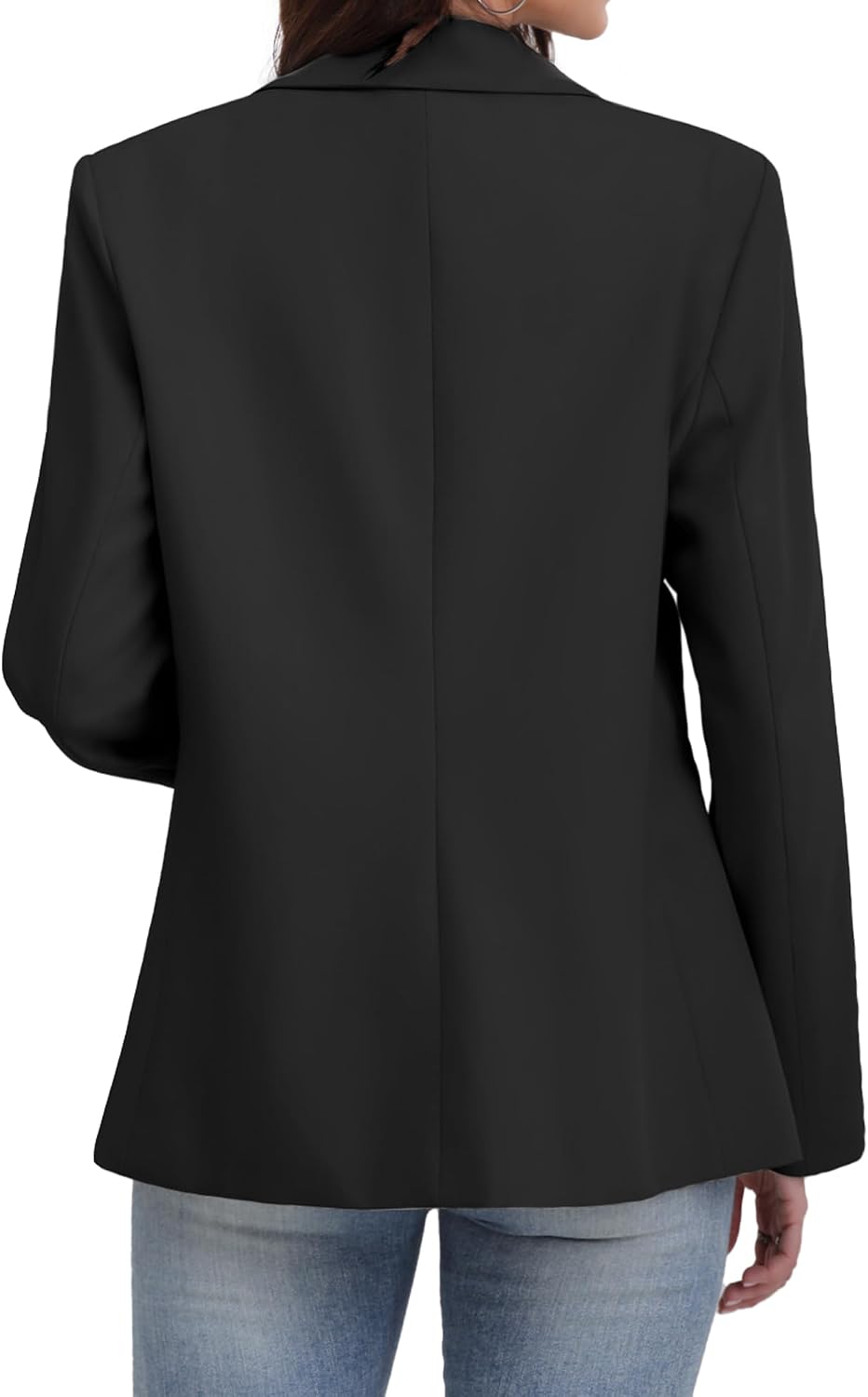
If you’ve ever searched “women’s blazer” on Amazon and felt overwhelmed by the sheer number of $30–$50 options from brands you’ve never heard of before, you’re not alone. A blazer — in workwear terms, a structured, tailored jacket worn over a top or dress to signal polish and authority — is one of the single most versatile pieces a professional wardrobe can contain. At the $40 price point, you’re not buying a garment with hand-stitched lapels or Italian wool; you’re buying a piece that’s expected to look the part in a conference room or client Zoom without asking much from your wallet. ELLEVEN is one of the most consistently recommended names in that Amazon budget tier, showing up in round-ups from Who What Wear and Harper’s Bazaar alike. This article breaks down what $40 actually buys here, where ELLEVEN holds up, where it doesn’t, and how it compares to the next tier up — so you can make a clear decision.
What ELLEVEN Actually Is (and Isn’t)
ELLEVEN is an Amazon-native brand — meaning it was built to sell through Amazon’s marketplace rather than through wholesale department stores or its own retail footprint. That distinction matters for a few reasons. Amazon-native brands at this price point typically operate on high volume and low margin, which means fabric and construction decisions are made to hit a number, not to chase quality ceilings. The brand’s blazers are almost universally made from polyester-blend ponte or suiting fabric — “ponte” being a dense, double-knit fabric with a slight stretch that holds its shape reasonably well without ironing. This is not a negative or a positive by itself; it’s a tradeoff you need to understand before buying.
The ELLEVEN lineup leans toward open-front longline blazers and single-button structured styles, most landing in the $35–$55 range depending on colorway and cut. Reviewers across Amazon’s platform (tens of thousands of ratings across the brand’s top SKUs) consistently note that sizing runs slightly small, that the fabrication photographs better than it feels in person, and that the structured shoulder — one of the key visual signals of a “work-appropriate” blazer — holds up well for the first season before showing wear at the seams.
Who What Wear’s editors, in their Amazon blazer round-up, flag ELLEVEN’s open-front longline style as a “legitimately office-appropriate option” with the caveat that it reads best in neutral colors (black, camel, ivory) where the fabric’s sheen is less noticeable under office lighting.
By the Numbers
| Price tier | What you’re buying | Expected lifespan | Dry clean or hand wash? |
|---|---|---|---|
| ELLEVEN (~$40) | Polyester-blend ponte, machine construction | 1–2 seasons of regular wear | Machine wash cold |
| Banana Republic / J.Crew (~$120–$200) | Wool-blend or heavier ponte, reinforced seams | 2–4 seasons | Dry clean recommended |
| COS / Club Monaco (~$250–$400) | Elevated fabrication, cleaner finishing | 3–5+ seasons | Dry clean or delicate |
| Reiss / Theory (~$395–$600+) | Suiting fabric, canvas or fused interlining | 5–10 years with care | Dry clean |
The table above is a rough benchmark drawn from published retailer specs and aggregated reviewer patterns — not a lab test. The point is to frame the decision correctly: at $40, ELLEVEN is not competing with a $395 Reiss jacket. It’s competing with the question of whether you need a blazer right now and whether this one will do a specific job without embarrassing you.
What Owners Report: The Consistent Signals
Across several thousand Amazon reviews and editorial mentions in Refinery29’s Amazon professional wear guide and Harper’s Bazaar’s affordable blazers feature, a pattern emerges that’s worth naming explicitly:
The case for ELLEVEN:
- It photographs very well. The structured shoulder and clean lapel read as polished on video — which matters enormously in a hybrid-office world where your top half is your entire professional presence on a Zoom call. Reviewers describe it as looking “more expensive than it is” in photos.
- It requires almost no maintenance. Machine-washable, wrinkle-resistant fabric is genuinely useful if you’re traveling for client meetings or commuting on public transit. At this price point, that’s a real differentiator versus a dry-clean-only alternative.
- Sizing is predictable once you know the correction. The near-universal reviewer recommendation is to size up one, especially if you’re between sizes or have a broader shoulder. Owners report that sizing up eliminates the pulling across the back that reviewers flag at true-to-size.
- The longline silhouette is flattering across a wide range of body types and currently aligns with mainstream office-wear aesthetics, per 2025 trend coverage in The Cut’s capsule wardrobe guidance.
The case against:
- The fabric shows wear faster than the price suggests. Owners in longer-term reviews (6+ months of regular wear) note pilling at friction points — the underarm, the sleeve edge, the inside of pockets if you use them. This is an expected property of polyester-blend ponte at this price, not a defect, but it’s worth knowing.
- It does not layer well under a coat. The fabrication adds bulk at the shoulder when worn under a structured overcoat, making it better suited to warmer months or climate-controlled offices.
- The lining — if present — is thin. Several reviewers describe feeling the seam structure through the lining after a full day of wear, particularly in fitted styles. This is a construction quality signal that separates the $40 tier from the $150+ tier more than any single other factor.
- Color accuracy varies. Reviewers in Refinery29’s coverage note that “camel” and “khaki” colorways in particular can photograph warmer or more saturated than they arrive — a known challenge with Amazon product photography.
The Real Comparison: ELLEVEN vs. The Next Tier Up
Here’s where the intermediate-practitioner framing matters most. If you’re reading this, you’re probably not deciding between ELLEVEN and Brunello Cucinelli. You’re deciding between ELLEVEN at $40 and something at $120–$200 — a Banana Republic factory blazer, a J.Crew Regent blazer, or a similar mid-tier option — and trying to figure out whether the $80–$160 gap is worth it.
The honest answer is: it depends on how many times you need to wear it.
If you need a blazer for two or three specific occasions — a final-round interview, a client dinner, a presentation — the ELLEVEN makes financial sense. It will look appropriate, it won’t demand dry cleaning, and the cost-per-wear on two or three uses is very low. If that same blazer needs to anchor your workwear rotation for 18 months, the math shifts. At three wears per week, a garment that shows visible wear at 6 months has a cost-per-wear that catches up to a $150 blazer that holds for two years.
Who What Wear’s editorial team makes a similar distinction in their Amazon blazer coverage, noting that budget blazers “earn their place as a placeholder or second blazer” rather than a primary investment piece.
The construction difference you’re buying at $120–$200 is primarily in two places:
- Interlining — the internal layer that gives a blazer its structure. At $40, this is typically a fused (glued) interlining that can bubble or separate after repeated washing. At $150+, you start seeing sew-in or at minimum better-quality fused interlinings that hold shape longer.
- Seam finishing — how the inside of the garment is finished. Open, unfinished seams fray. Bound or French seams last significantly longer. This is invisible on the outside but determines whether the garment survives repeated washing.
Neither of these is a dealbreaker at the price point. They’re just the honest explanation of where the $40 goes.
When ELLEVEN Makes Sense — and When to Spend More
Buy ELLEVEN if:
- You need a backup blazer for travel, where packing stress and potential damage are real risks to an expensive piece.
- You’re building a first capsule wardrobe and not yet sure which silhouette and color work best for your body and your office environment. At $40, it’s a low-stakes way to test whether an open-front longline works for you before committing to a $300 version.
- Your office wears blazers rarely, and you need one a handful of times per year rather than as a workwear cornerstone.
- You’re in a role where video presence matters more than in-person tactile impression — the blazer will read well on screen.
Step up to $120–$250 if:
- You wear a blazer two or more times per week and need it to hold shape and color through a full professional season.
- Your work involves close client interaction where fabric quality registers in person — creative direction, consulting, client services, or any environment where people are close enough to notice a fabric’s hand (how it feels and drapes).
- You’ve already owned a budget blazer and know what silhouette and fit work for you, and you’re ready to invest in a version that will last.
Go to $350+ if:
- You’re treating the blazer as a long-hold investment piece in the way The Cut’s capsule wardrobe guidance describes — a piece you’ll wear for five or more years and potentially resell. At this level, brands like COS, Reiss, and Theory offer construction quality where resale value on platforms like The RealReal is a realistic consideration.
The Bottom Line
ELLEVEN delivers a blazer that is genuinely office-appropriate, structurally sound enough for the first season, and almost shockingly good on camera for $40. It earns the positive coverage it receives in Who What Wear and Harper’s Bazaar round-ups — with the important caveat that both publications frame it as a budget entry point, not a primary wardrobe investment.
The decision rule is straightforward: if you need a blazer for occasional use, a specific short-term need, or as a low-stakes trial of a silhouette, ELLEVEN is worth the $40. If you need a blazer that will perform as a regular rotation piece for a year or more, put the $40 toward a $150 mid-tier option and accept the longer payback period — the construction difference will pay for itself in longevity. At $40, ELLEVEN isn’t pretending to be something it isn’t. That honesty, reflected in its pricing, is the main reason it earns a qualified recommendation here.