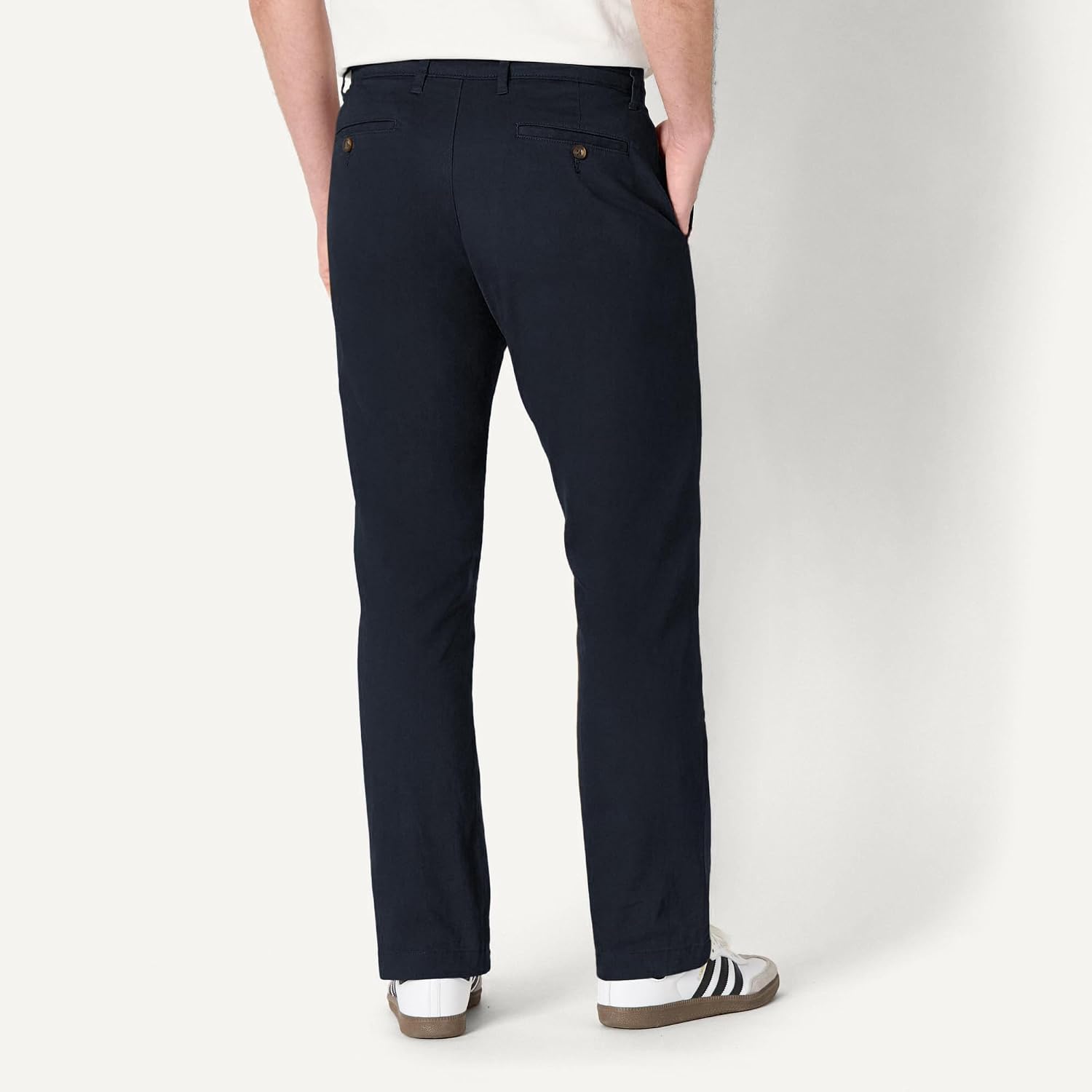
If you’ve ever ordered a pair of chinos labeled “slim fit” and received what felt like a classic trouser — or picked up an “athletic fit” hoping for something that hugged your quads and ended up with a billowing mess through the thigh — you’re not doing it wrong. The labels are. “Slim,” “athletic,” and “tapered” are marketing terms, not industry-standard measurements, and different brands use them to describe genuinely different silhouettes. This guide cuts through that ambiguity. We’ve synthesized verified buyer reviews across multiple brands and aggregated fit-pattern data to build a body-type decision framework that works regardless of which label a brand chooses to slap on the hang tag. By the end, you’ll know which cut to reach for first based on your own proportions — and which red flags in a product listing mean you should scroll past.
What the Labels Actually Mean — and Where They Break Down
Let’s establish a shared vocabulary before we apply it to your body. A chino’s fit is determined by three measurements working together: the seat (the room across the seat and hip), the thigh (the circumference through the upper leg), and the taper (how much the leg narrows from knee to hem). Labels describe the combination of all three, but brands weight them differently.
Classic fit is the baseline: full seat, full thigh, straight leg with little to no taper. It’s roomy throughout and forgives a wide range of body types, but reads as boxy on leaner frames.
Slim fit is supposed to mean a reduced seat and thigh relative to classic, with some taper through the lower leg. The operative word is “supposed to.” Reviewers of the Dockers Slim Ultimate Chino — one of the most widely purchased office chinos at the accessible price tier — consistently note that it “fits more like a classic fit than a slim.” That’s not a one-off complaint; it’s a pattern that surfaces across aggregated reviews and signals a deliberate sizing choice by the brand, likely to accommodate the broadest possible customer base while still using the word “slim” in the name. The practical lesson: Dockers’ interpretation of slim runs large compared to what the same word means at, say, Club Monaco or Suitsupply.
Athletic fit carries the most dangerous misconception of the three. Many buyers assume it means a fitted, performance-oriented cut through the thigh — something designed to accommodate muscular legs without strain. In practice, reviewers across brands, including notable buyer feedback on the Amazon Essentials athletic-fit chino, describe it as “too full, especially in the back of the legs.” What’s happening here is that “athletic fit” typically means more room throughout — larger seat, larger thigh block — to prevent fabric pulling across a larger frame. It’s a cut designed for bigger builds in general, not a precision fit for someone who lifts. If you have genuinely large thighs relative to your waist and you want fabric that actually contours to the muscle, athletic fit is likely not your answer.
Tapered fit is the most precise term in the group, and it’s the one that most consistently delivers on its promise. Tapered means the leg narrows meaningfully from the knee down to the hem, creating a cleaner break at the ankle regardless of what’s happening higher up. Crucially, a chino can be tapered and have a generous thigh block — which is exactly the combination that solves the problem for men with proportionally larger thighs. Buyer reviews of Plaid&Plain chinos, a brand that has built a following specifically among men with this proportion, include firsthand accounts from buyers who describe thighs that are “bigger than lower legs” and say the tapered fit finally solved a fit problem they’d been working around for years. The taper through the calf is what prevents that drooping, gathered look at the ankle that plagues straight-leg fits on tapered bodies.
The Body-Type Decision Framework
Here’s the practical translation layer. Your goal is to match your actual proportions to the part of the chino construction that matters most for each.
If your thighs are proportionally larger than your waist — common among runners, cyclists, and anyone who trains legs — your primary problem is thigh room without a balloon seat. The athletic fit label often gives you more seat than you need and still may not give you enough through the thigh. Your better move: look for a tapered fit with a generous thigh block, or a brand that explicitly cuts for this proportion (Plaid&Plain being the clearest example in the market). Size up in the waist if needed and have the waistband taken in by a tailor — that alteration costs roughly $15–25 at most local tailors and is far cheaper than returning and reordering.
If you’re lean through the hip and thigh — a 32” waist with proportionally narrow legs — slim fit is your natural territory, but the brand’s interpretation matters enormously. A slim fit at Banana Republic or J.Crew reads more generously than slim at COS or Suitsupply. If you find most slims still feel roomy through the thigh, try a brand that uses European sizing conventions, where slim genuinely means narrower.
If you carry weight through the seat and hip — the classic “harder to fit” proportion where the seat requires more room but you don’t want a wide-leg look — classic or athletic fit gives you the seat clearance you need. Pair it with a trouser that tapers from the knee down to avoid the full-leg silhouette. A hemmed break (where the trouser rests cleanly on the shoe with little to no extra fabric) also modernizes the look without any alteration.
If you’re proportionally balanced — your thigh and seat measurements align with standard sizing blocks — slim fit from most brands will work, and tapered is a style choice rather than a fit necessity. This is the most forgiving proportion, and it’s where most mainstream brand cuts are designed to land.
Stretch Fabric, Sizing, and What Happens After 20 Washes
Stretch chinos — fabrics with 1–4% elastane (also called spandex or Lycra, terms for the same synthetic stretch fiber) woven into a cotton base — are now the default at most price points from Old Navy through Banana Republic and into the lower end of premium brands like Reiss and Massimo Dutti’s entry offerings. Stretch makes a real difference in wearability, especially for anyone sitting at a desk for long hours. But it introduces two sizing complications worth naming explicitly.
First: size up in stretch fabrics, not down. This is the counterintuitive part. Because stretch allows the fabric to move with you, buyers often assume they can size down and let the fabric accommodate the difference. Reviewers across multiple brands — including stretch chinos from Levi’s, Dockers, and Amazon Essentials — consistently recommend going up one size from your usual measurements. The stretch does not add room; it prevents restriction. If you size down into a stretch chino thinking the fabric will “give,” you’ll likely end up with pulling across the seat and a trouser that won’t press flat.
Second: wash before you wear. Levi’s chino reviewers specifically flag this, noting that stretch pants “will tighten up” after the first wash and will feel different from how they fit in the dressing room or when they first arrive from an online order. Running a wash cycle before committing to the fit — especially around the thigh and seat — gives you an accurate read before the return window closes.
On longevity: stretch chinos are more likely to develop “knee bagging” (that puffy, stretched-out look at the knee from repeated sitting) than rigid cotton chinos. Business of Fashion’s coverage of stretch fabric’s entry into the trouser market notes that elastane blends are more susceptible to stretch fatigue — meaning repeated stress on the same areas gradually reduces the fabric’s ability to recover its shape. Buyers in long-run reviews confirm this pattern: pilling and bagging at the knee tend to appear between 12–24 months of regular wear. Hanging rather than folding your chinos and avoiding overwashing (every 3–4 wears is reasonable for an office trouser) slows this significantly.
By the Numbers
| Fit Label | Seat | Thigh | Taper | Best For |
|---|---|---|---|---|
| Classic | Full | Full | None/minimal | Generous builds; formal-adjacent settings |
| Athletic | Full+ | Full+ | Slight | Larger overall frame; not a quad-specific cut |
| Slim | Reduced | Reduced | Moderate | Lean to average proportions; varies by brand |
| Tapered | Varies | Varies | Pronounced | Thigh-to-calf contrast; modern silhouette |
Frequently Asked Questions
If I have large thighs relative to my waist, which fit label should I look for? Tapered, not athletic. Athletic fit adds room throughout — seat, hip, and thigh — which may not solve the proportional mismatch. Tapered fit addresses the lower-leg issue (the drooping ankle) without necessarily restricting the thigh. Brands that explicitly cut for this proportion are your best starting point. If standard tapered still pulls, size up and have the waist taken in.
Does stretch fabric mean I should size down or size up from my usual pants size? Size up, or at minimum stay true to size. Across aggregated reviewer data, the consistent pattern is that stretch fabrics tighten after washing and feel snugger in regular wear than they do fresh out of the bag. The stretch gives range of motion, not extra room.
What does “tapered” actually mean — is it the same as “slim”? No. Slim refers to reduced volume throughout — seat, thigh, and leg. Tapered refers specifically to the leg narrowing from the knee down, regardless of what’s happening above. A trouser can have a generous thigh and still be tapered. That distinction matters enormously if your issue is the ankle silhouette rather than overall volume.
Why do some reviewers say a “slim fit” pant fits like a “classic fit” — how do I know before buying? Brand sizing conventions differ significantly. Dockers’ slim cut, for example, runs notably fuller than slim at Suitsupply or COS. The most reliable pre-purchase signals: check the brand’s fit guide for actual measurements (waist, thigh circumference, leg opening), search aggregated reviews for the specific phrase “runs large” or “fits like classic,” and cross-reference fit descriptions from style sources like Esquire or GQ who cover the brand specifically.
How do I find chinos long enough for a 34-inch inseam without ordering big-and-tall? Many mainstream brands cap their standard inseam at 32”. Brands that reliably stock 34” and 36” inseams in standard sizing (not extended lines) include Banana Republic (in select styles), Bonobos — which built its early reputation on inseam variety — and Plaid&Plain for athletic-thigh proportions. Filtering by inseam before committing to a style saves the return cycle.
Do stretch chinos hold their shape after multiple washes or do they bag out at the knees? Knee bagging is a real and documented issue with elastane blends. Long-run reviewers consistently report it developing in the 12–24 month range with regular wear. Mitigation: hang rather than fold, wash less frequently (3–4 wears between washes), and wash on cold. Higher elastane percentages (3–4%) tend to recover better than lower-quality blends, though the trade-off is a slightly shinier surface texture that reads less formal.