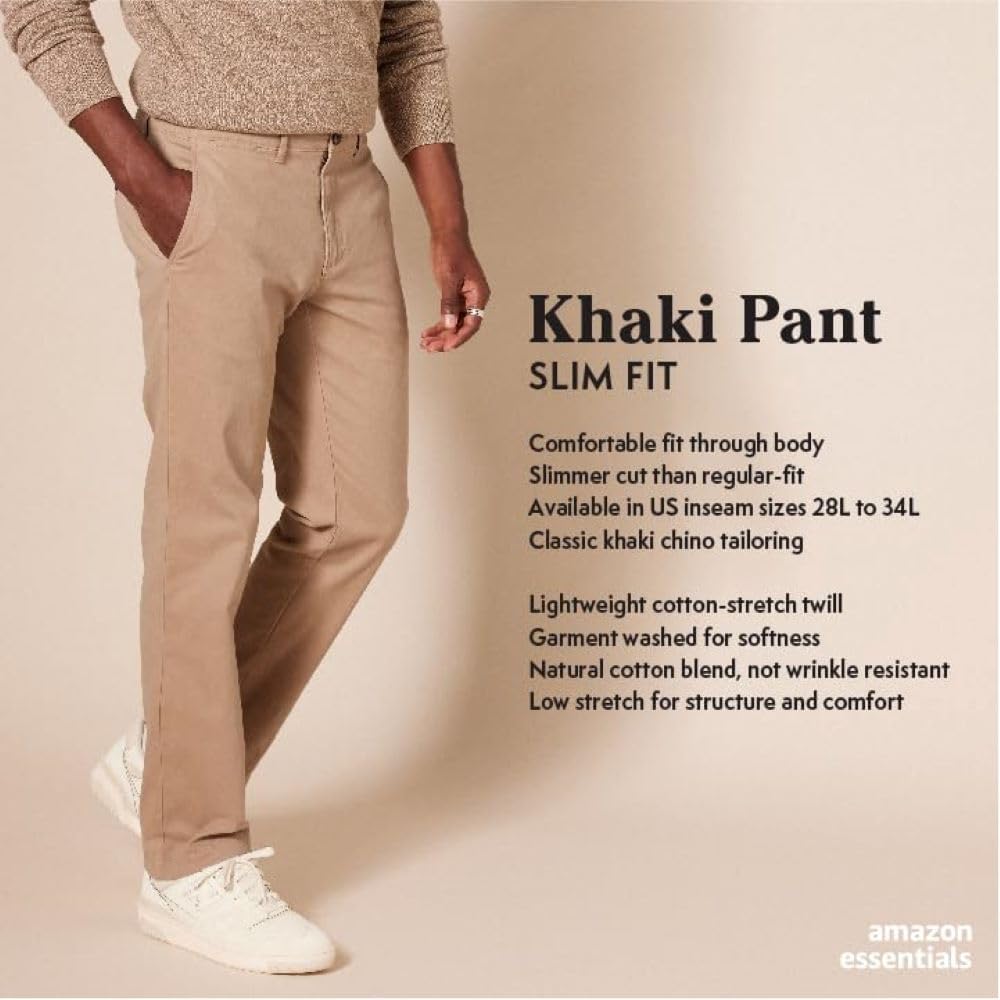
Chinos — the cotton-blend trousers that live somewhere between jeans and dress pants on the formality spectrum — have become the de facto trouser of the modern business-casual office. But walk into any retailer and you’ll immediately hit a wall of fit names: slim, straight, athletic, skinny, tailored, relaxed, modern. These aren’t decorative labels. Each describes a specific set of measurements — mainly the thigh opening, knee taper, and leg opening — that determine whether a pair looks intentional and polished or like you grabbed the wrong size off the rack. This guide breaks down each fit category in plain terms, maps them to real brands at different price points, and gives you a clear decision rule for whichever office environment you’re dressing for. By the end, you’ll be able to read a product page description and know — before checkout — whether that pair belongs in your rotation.
What the Fit Names Actually Mean (and Why They Vary by Brand)
Before you can use fit labels reliably, you need to understand one uncomfortable truth: “slim” at J.Crew is not the same as “slim” at Banana Republic, and neither matches “slim” at COS or Suitsupply. Brands calibrate their named fits against their own internal block — the baseline body form their patterns are built around — not against any universal standard.
That said, the fit names do follow a general hierarchy from narrowest to widest, and understanding where each sits helps you triangulate even when you’re shopping a new brand.
Skinny fit is the narrowest cut across the board. The thigh is close to the leg, there’s a strong taper through the knee, and the leg opening — the circumference at the ankle — is typically 13–14 inches or less. In a work context, skinny chinos read as fashion-forward or casual. They can work in creative offices (think agency, media, architecture), but they tend to undercut the authority of a blazer or sport coat because the silhouette skews young and trend-driven. GQ’s “Best Chinos for Men” guide notes that skinny chinos have largely peaked in mainstream professional dressing and are now more often seen in streetwear-adjacent contexts.
Slim fit is the sweet spot for most professional environments. The thigh has room to move without excess fabric, the taper through the knee is moderate, and the leg opening lands around 14–15.5 inches. This is the cut that looks intentional when worn with a blazer, Oxford shirt, or merino crewneck. It reads as contemporary and put-together without veering into fashion-forward territory. Slim is also the most widely offered fit across mid-market and premium brands — Banana Republic, Suitsupply, Club Monaco, and Massimo Dutti all anchor their chino ranges here.
Athletic fit (sometimes called “athletic taper” or “tailored athletic”) was developed to solve a specific problem: men who have thighs that fill out a slim-fit trouser but then end up with a baggy leg below the knee. The athletic fit is cut wider through the seat and thigh and then tapered more aggressively below the knee to compensate. Done well — as reviewers consistently note about Suitsupply’s Manny fit and Bonobos’ Athletic Fit — the result looks as trim as a slim cut but accommodates a fuller lower body without pulling or creasing across the thigh. This is arguably the most functional cut for men who lift or have a proportionally heavier lower body.
Straight fit runs the same width from the knee to the hem without significant taper — the leg is a consistent tube shape. The thigh room is moderate to generous. Straight chinos read as classic and unfussy; they work well in traditional professional environments (finance, law, consulting firms with dress codes that lean conservative) and pair naturally with Oxford shoes and a tucked shirt. Esquire’s fit guide describes straight-leg trousers as having a “quiet authority” that slim and athletic cuts can’t fully replicate — the silhouette references tailored trousers more than casual denim.
Relaxed fit is the widest cut in most brand ranges. The thigh and seat are generous, and the leg opening is wide. In a work context, relaxed chinos are almost exclusively a creative-office proposition — they need to be worn with intention (an oversized blazer, a structured coat, a considered shoe) or they read as casual rather than casual-professional. COS and Arket have made relaxed-fit trousers a design signature, and in those contexts they’re genuinely elegant. But for a first-time buyer or someone building toward authority dressing, relaxed is the highest-risk fit to pull off without the rest of the outfit working hard.
By the Numbers: Approximate Leg Openings by Fit
| Fit Label | Typical Leg Opening (inches) | Best Office Context |
|---|---|---|
| Skinny | 13–14 in | Creative / casual only |
| Slim | 14–15.5 in | Most business-casual offices |
| Athletic | 14.5–15.5 in (tapered from wider thigh) | Best for athletic builds |
| Straight | 15.5–17 in | Traditional / conservative offices |
| Relaxed | 17–19 in | Creative offices, directional dressing |
Measurements are approximate and vary by brand. Always check the brand’s own size guide against your measurements.
How to Read Brand Fit Descriptions Without Getting Burned
The label is only the first data point. Here’s how to go deeper before you buy.
Check the actual measurements, not just the name. Most mid-market and premium brands now publish a measurements table — thigh width, knee width, and leg opening — for each size in each fit. Banana Republic, J.Crew, and Suitsupply all do this. If you find the fit measurements for a pair you already own and like, you can cross-reference directly rather than trusting that a new brand’s “slim” matches the one you know.
Read the description for silhouette language. Words like “tapered,” “relaxed through the seat,” “straight through the knee,” and “cropped” tell you more than the fit name. Business of Fashion’s trend coverage of the office casualization wave (2024) specifically noted that “tapered” has become the dominant descriptor in premium workwear because it communicates intentionality without narrowness — a useful signal that the pair is designed for a put-together look.
Pay attention to rise. Rise — the distance from the crotch seam to the waistband — affects how formal and how comfortable a chino feels independently of the leg cut. A mid-rise (about 10–11 inches in a size 32) sits naturally at the waist and works under a blazer without pulling or gapping. A lower rise (under 10 inches) reads more casual; a higher rise (11.5 inches and up) reads more formal and is experiencing a strong commercial revival as of early 2026, particularly at COS, Arket, and the premium end of Massimo Dutti.
Factor in fabric stretch. A slim-fit chino in a rigid cotton canvas will feel very different from the same fit in a cotton-elastane blend. Most major brands now add 1–3% elastane (also called spandex or Lycra — these are all the same fiber) to their chino fabric. Who What Wear’s workwear trouser guide flags that the addition of stretch materially affects perceived fit: a slim-fit stretch chino often feels closer to a traditional straight fit in terms of comfort, which means buyers sometimes size down unnecessarily. If you’re buying stretch, consider trying your normal size before going up.
Price-to-Fit Quality: What Different Budgets Actually Buy
Understanding fit labels is one thing. Understanding what a higher price actually gets you — beyond the name on the tag — is what separates a considered purchase from an aspirational one.
$60–$110 range (Goodfellow & Co at Target, Old Navy, H&M): These brands offer slim, athletic, and straight fits that are correctly labeled and serviceable. The trade-off is fabric quality — lighter weight cotton or high-stretch blends that may bag at the knee over time and rarely hold a clean drape after a dozen washes. The fit architecture is there; the material longevity isn’t. Useful for building a rotation while you figure out which fit actually works for your body.
$110–$200 range (Banana Republic, J.Crew, Dockers Premium, Uniqlo premium line): This is where fabric weight and construction start to matter noticeably. Banana Republic’s Slim-Fit chinos in their core cotton-twill are frequently cited by reviewers as a reliable slim-fit benchmark — the proportions are true, the fabric has enough body to drape without wrinkling badly, and the construction holds shape through regular washing. J.Crew’s 484 Slim is a similar reference point, though reviewers consistently note that J.Crew’s “slim” runs slightly trimmer through the thigh than Banana Republic’s equivalent.
$200–$400 range (Suitsupply, Club Monaco, Reiss, Massimo Dutti): At this tier, you’re buying better fabric composition (higher cotton counts, finer twills, occasional linen-cotton or wool-cotton blends), more precise pattern-making, and fit options that are genuinely differentiated rather than just named differently. Suitsupply’s chino range — the Stan, Manny, and Liam fits — is consistently cited in GQ’s best-chinos coverage as offering the most honest athletic-fit execution in the category: the thigh room is real, the taper below the knee is significant, and the result reads as trim rather than compensatory.
$400+ range (Theory, Vince, Sandro, Joseph): Construction details change: cleaner internal finishing, better buttons and hardware, fabric that drapes differently because the thread count and weight have been deliberately engineered. Theory’s Zaine chino in their Precision Ponte fabric — a semi-structured cotton-blend — is a frequently referenced example of a slim-straight hybrid that reads polished enough for client meetings and relaxed enough for a hybrid Friday.
The If-X-Then-Y Decision Rule
After mapping the variables — fit label, brand calibration, fabric, price tier, and office context — the decision rule becomes fairly mechanical:
If your office is traditional business-casual (law, finance, consulting, corporate retail): default to straight or slim, in a rigid or low-stretch cotton. Rise should be mid to slightly higher. Keep the leg opening at 15–16 inches in your size. Budget $130–$250 and look at Banana Republic, Massimo Dutti, or Reiss.
If your office is creative business-casual (agency, tech, architecture, media): slim or athletic fit gives you the most range. Consider a slight crop (ankle or just above) if the brand’s proportions run long. Budget $150–$350 and look at Suitsupply, Club Monaco, or COS depending on how directional your office’s aesthetic runs.
If you have an athletic build (fuller thighs relative to waist): skip slim and go straight to athletic-taper fits. Bonobos and Suitsupply are the most consistently recommended at this problem. Budget $100–$280.
If you’re building a capsule and buying one pair: Buy slim, mid-rise, in a neutral (khaki, stone, navy, or olive), with minimal stretch. This is the most versatile single chino configuration across office environments, documented repeatedly in both Esquire’s fit guides and GQ’s annual workwear roundups. Spend in the $130–$200 range until you know your preferred fit well enough to invest more.
Fit is not a style preference — it’s infrastructure. Get it right and every other element of your work outfit has an easier job to do.