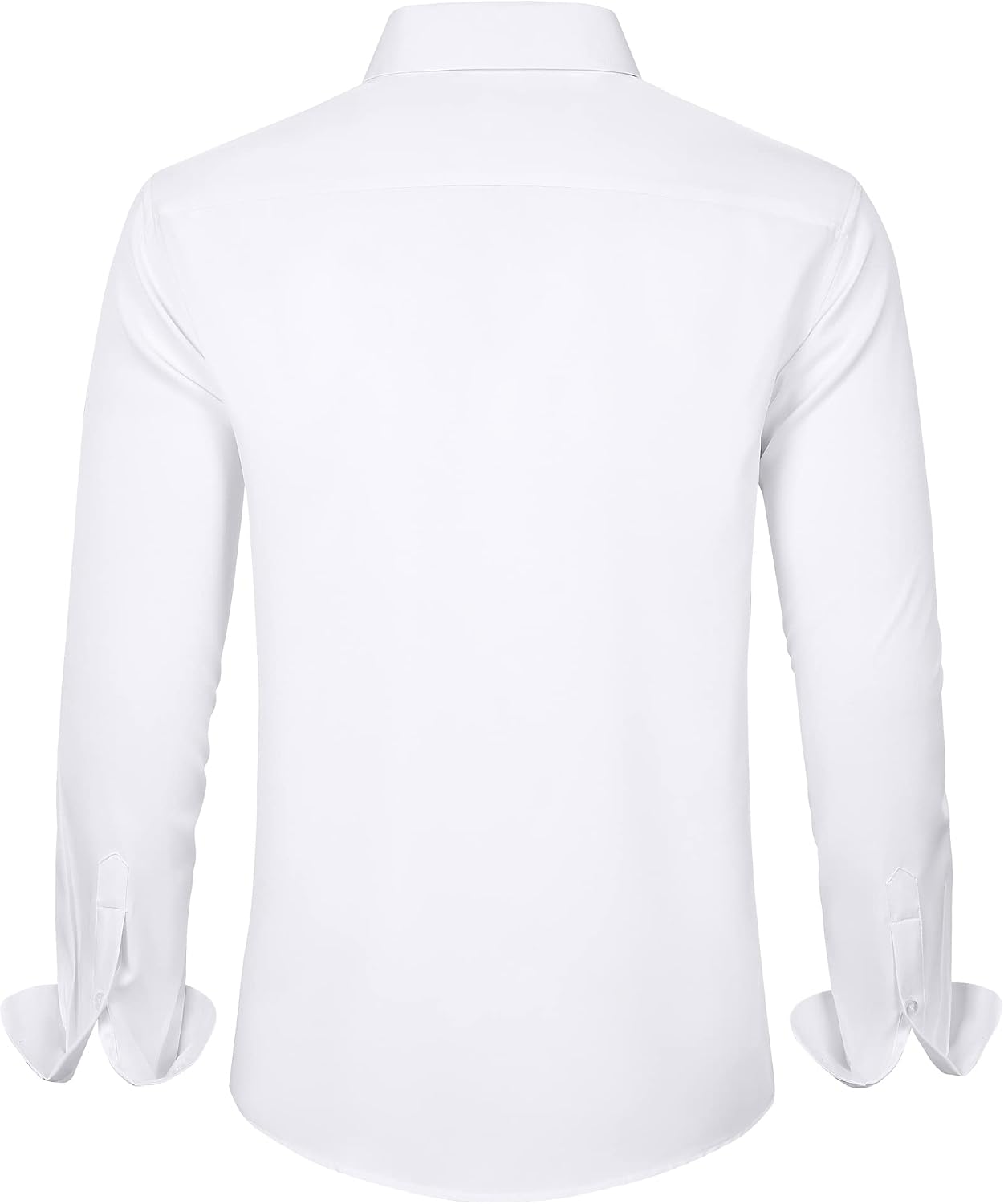
A stretch dress shirt is exactly what it sounds like: a button-up shirt—the kind you’d wear to an office, a client meeting, or a dinner where you need to look pulled-together—built with a small percentage of elastane or spandex woven into the fabric so it moves with your body instead of fighting it. That single engineering choice matters more than most people expect. A non-stretch dress shirt in the wrong cut becomes a straitjacket by noon. A well-fitted stretch shirt lets you reach across a conference table, commute without creasing, and breathe normally through a full workday. This comparison breaks down four categories of stretch dress shirts doing real volume right now—J.VER’s standard and Stain Shield lines, Van Heusen’s poplin, BEILU’s slim fit, and the unbranded options that often surface in search results without a recognizable name. The goal is to give you the decision framework to choose correctly the first time, not the second.
What You’re Actually Comparing at These Price Points
Before getting into shirt-by-shirt specifics, it helps to understand what the price gap between a $20 no-name shirt and a $35–$45 named brand actually buys you. Wirecutter, in their “The Best Dress Shirts” guide, identifies three functional variables that separate shirts in this tier: fabric opacity (whether you can see your undershirt or skin through the weave), finish durability (how many wash cycles a wrinkle-resistant or stain-repellent treatment survives before degrading), and construction consistency (whether the seams, buttons, and collar hold their shape after repeated laundering). At the under-$50 price point, you’re not buying superior raw materials—you’re buying more reliable quality control and better documentation of what the fabric does.
GQ, in “The Best Dress Shirts for Men,” draws a similar line: poplin—a plain, tightly woven fabric and the most common choice for dress shirts—at budget price points tends to run thin, which affects drape, durability, and whether the shirt looks cheap under overhead lighting. That context matters when reading what reviewers actually mean when they say a shirt is “a bit thin” or “surprisingly substantial.”
The Four Shirts, Head to Head
The comparison below covers each shirt as its own H3 section and terminates with a tier marker. A summary table follows for quick reference.
J.VER Standard Stretch: The Workhorse Pick
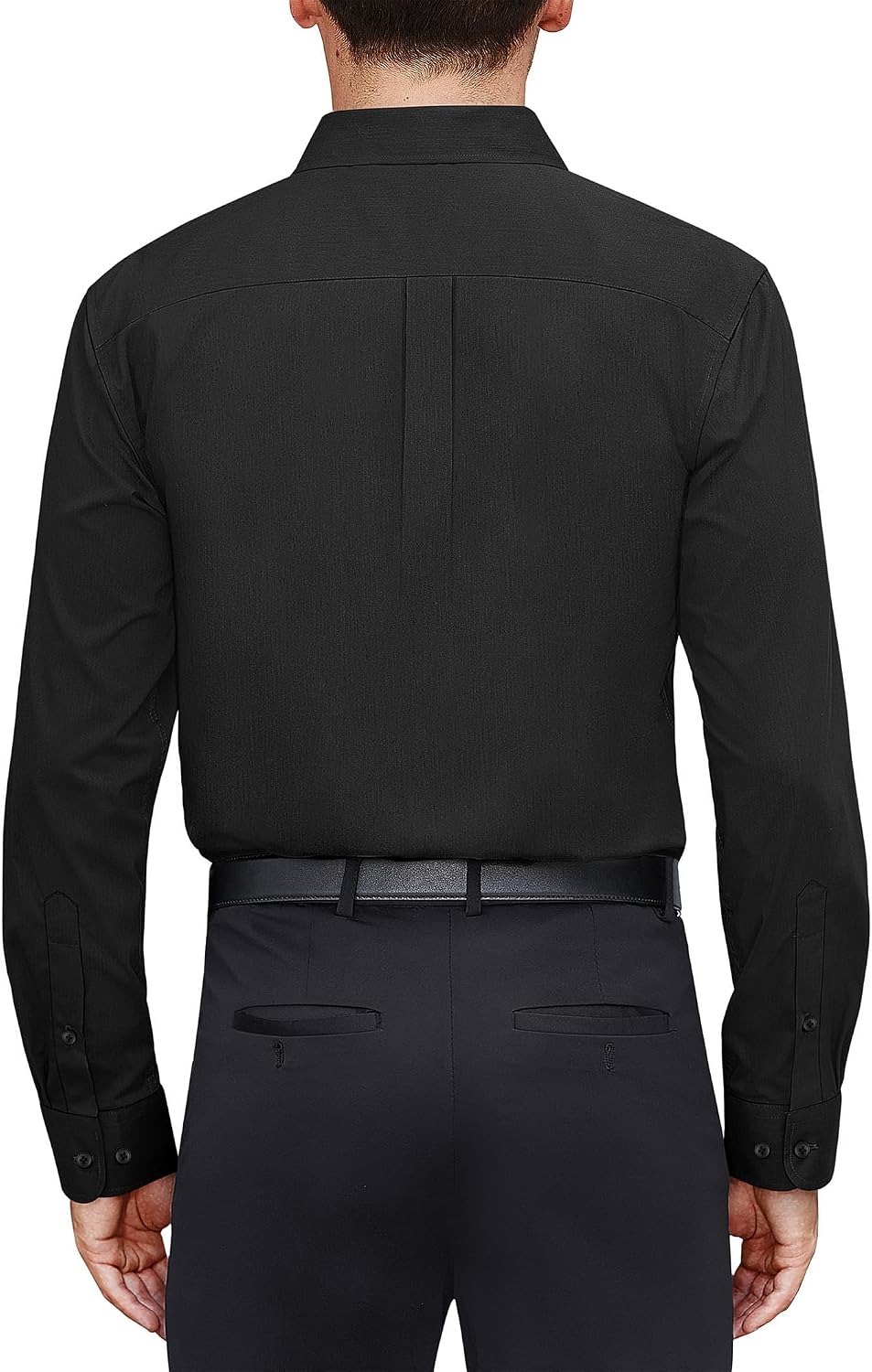
J.VER has built a quiet reputation as one of the better-performing labels in the stretch dress shirt category—which is a low bar to clear but one many brands still fail. What distinguishes J.VER in aggregated buyer feedback isn’t styling (these are conservative, office-ready shirts) but two functional claims that owners return to independently.
Opacity is the first. Reviewers consistently report that J.VER’s standard stretch shirts don’t require an undershirt to maintain a professional appearance. That sounds minor until you’ve worn a thin poplin shirt under fluorescent lighting and realized halfway through a presentation that your undershirt is fully visible. Business of Fashion, in “Fabric Finishes and Functional Apparel,” notes that opacity in budget dress shirts is primarily a function of thread count and weave tightness rather than premium fiber—J.VER appears to have hit an adequate threshold here.
Wash durability is the second. Multiple owners report that the wrinkle-resistant finish—a chemical treatment applied to the fabric during manufacturing that reduces creasing—holds up across a meaningful number of wash cycles. Wirecutter’s “The Best Dress Shirts” specifically flags wrinkle-resistant finishes as one of the more variable quality signals in budget shirts; some fade after four or five washes, some hold for twenty. J.VER’s higher-rated reviews disproportionately mention the finish still working after months of regular wear, which is a more useful signal than first-impression reviews.
Best for: Slim-to-athletic builds prioritizing opacity and wrinkle resistance over everything else. Watch out for: Sizing inconsistency at XL and above; order one to confirm before buying multiples.
BEILU
$12.99
In stock on Amazon
Check price on AmazonJ.VER Stain Shield: The Credible Upgrade
The Stain Shield variant earns separate mention because the stain-repellent claim is backed by a specific buyer account worth taking seriously: a reviewer who dropped marinara sauce at a team lunch and watched it bead and roll off the fabric. Stain-repellent finishes—typically surface treatments that cause liquids to bead rather than absorb—are genuinely effective when applied correctly, but they degrade with washing if care instructions aren’t followed. Business of Fashion, in “Fabric Finishes and Functional Apparel,” confirms this degradation pattern across functional textile treatments generally: high-heat drying accelerates breakdown significantly.
The credibility here isn’t from the marketing language; it’s from buyers describing real scenarios. The Stain Shield variant does carry a slightly stiffer hand feel—the way fabric feels against the skin—than the standard stretch version, which a small number of reviewers flag as a trade-off worth acknowledging.
Best for: Anyone whose workday involves client lunches, working dinners, or team events where spills are a realistic scenario. Watch out for: Slightly stiffer feel than the standard J.VER; follow cold-wash instructions to preserve the finish.
J.VER
$19.99
In stock on Amazon
Check price on AmazonVan Heusen Poplin Stretch: The Known Quantity
Van Heusen occupies a specific position in the dress shirt market: it’s the brand most buyers already recognize, which creates a different purchase dynamic. Buyers choosing Van Heusen aren’t usually discovering it—they’re returning to something familiar or defaulting to brand trust when they don’t want to research alternatives.
The poplin stretch shirt performs reliably on collar construction and overall silhouette, which is why even buyers who flag the fabric as “a bit thin” often still rate it highly. They’ve calibrated their expectations: at this price, Van Heusen delivers a consistent, wearable, professional shirt that holds its shape through the day. GQ, in “The Best Dress Shirts for Men,” notes that lighter poplin fabrics can look fine in photos but reveal their weight under office lighting or in person—Van Heusen reviewers essentially confirm this pattern, reporting the thinness as context rather than defect.
The practical implication: Van Heusen poplin works best in controlled environments—air-conditioned offices, client-facing meetings where you’re not moving much—where a lighter fabric doesn’t translate to visible wear by end of day. It’s less reliable for travel days or full-commute-plus-meeting schedules. Van Heusen also runs slightly more generous in the torso than brands targeting athletic or slim builds, which is useful information if you’re between fit profiles.
Best for: Standard or slightly generous builds who want predictable brand-name consistency. Watch out for: Fabric feels lighter than competitors; not ideal for high-movement or travel days.
J.VER
$19.99
In stock on Amazon
Check price on AmazonBEILU Slim Fit: The Retention Signal That Matters
BEILU is less familiar as a brand name, which means buyers arrive at it through search rather than brand loyalty. What’s notable in the aggregated review pattern is how often buyers describe trying multiple other shirts—sometimes four or five—before landing on BEILU and staying. That’s a meaningful retention signal. It suggests BEILU is solving a specific fit problem that other shirts in this tier don’t.
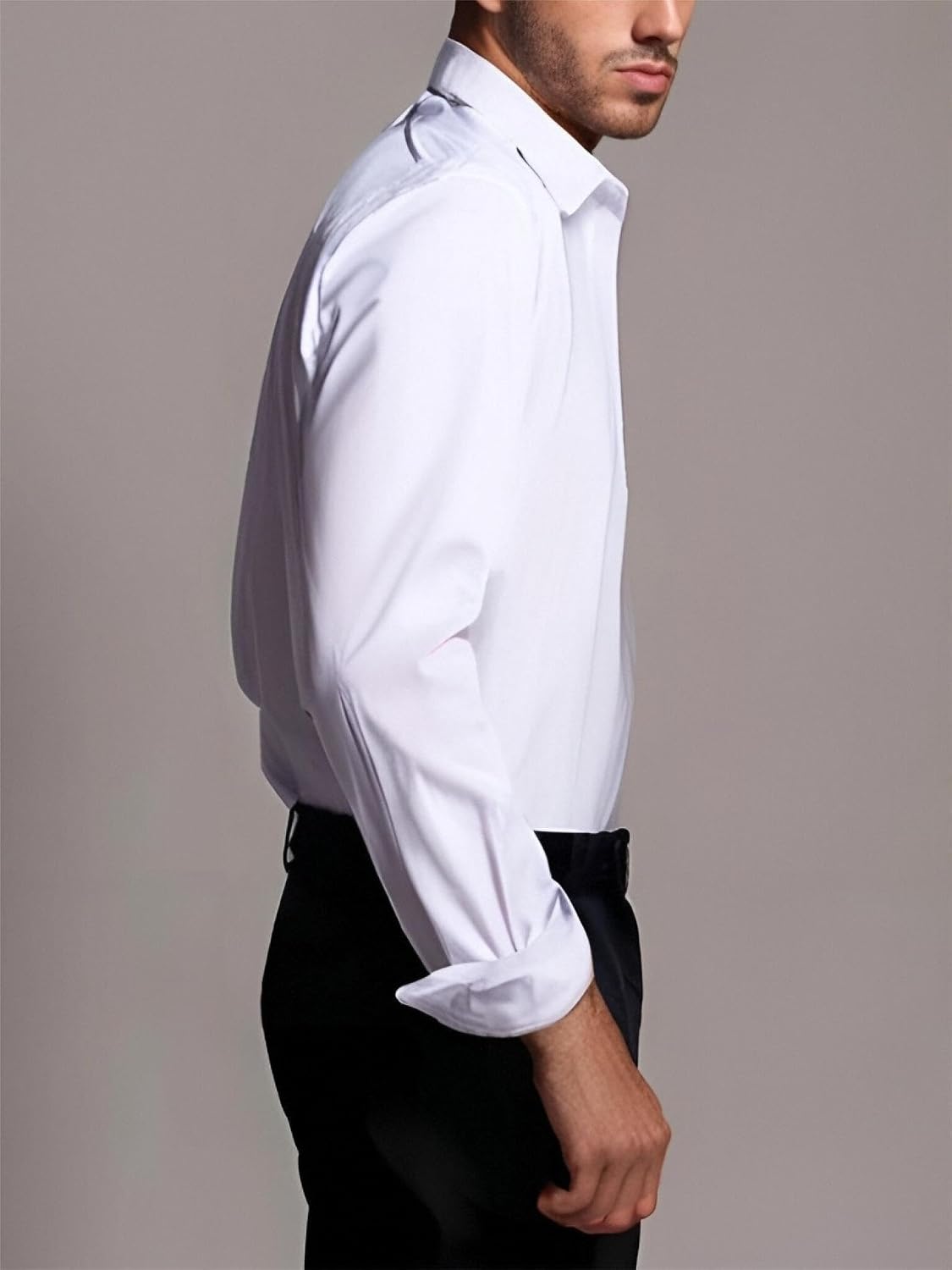
The fit problem it appears to solve is the slim-with-substance gap: buyers who need a genuinely tapered torso—not just marketed as slim but still boxy through the chest and sides—without the fabric becoming so light it loses structure. Multiple reviewers describe the BEILU fabric as notably soft relative to other shirts in this category. Esquire, in “How a Dress Shirt Should Fit,” emphasizes that torso taper should read as intentional structure, not compression—BEILU’s cut appears to achieve that for the slim-to-athletic proportion it targets.
If your fit challenge is specifically that shirts gap at the collar when you have a thicker neck and a slimmer torso, BEILU’s aggressive torso taper is worth examining. The slim fit cuts in more decisively through the midsection than Van Heusen’s standard cut, which means if you carry weight through the chest or midsection, BEILU likely won’t work—but if you’re proportionally slim through the torso with a larger collar size, the architectural difference matters.
Best for: Slim or athletic builds who’ve been failed by shirts labeled “slim” that still run boxy. Watch out for: Limited size range; buyers with broader chest or midsection measurements should look elsewhere.
J.VER
$19.99
In stock on Amazon
Check price on AmazonNo-Name Stretch Shirts: The Large-Frame Exception
Unbranded or generic stretch shirts occupy the bottom of the search results and are generally not recommended for anyone who values consistency—quality control variance is the defining characteristic of this category. But one data point from buyer reviews is worth surfacing: a reviewer at 6’4” and 250 pounds reported zero collar puckering or gathering in an unbranded shirt, which is a rare large-frame outcome. Puckering at the collar and gathering through the back yoke are the two most common fit failures for tall or large-build buyers in dress shirts, and the fact that a no-name shirt resolved both suggests the pattern-grading for that size run happened to align well with that buyer’s proportions.
This is not a recommendation to default to no-name shirts for large frames. It’s a reminder that size-run grading varies enough that occasionally a generic shirt fits a difficult proportion that named brands miss. If you’re shopping in XL or larger and have historically struggled with collar construction, treating no-name options as low-cost fit experiments—rather than ruling them out entirely—is a rational approach before committing to a multi-shirt purchase.
Best for: Large-frame buyers willing to treat a single purchase as a fit test before committing to a brand. Watch out for: Quality control is genuinely unpredictable; this is an experiment, not a reliable purchase.
BEILU
$12.99
In stock on Amazon
Check price on AmazonQuick-Reference Comparison
| Shirt | Most-cited praise | Most-cited concern | Fit signals | Tier |
|---|---|---|---|---|
| J.VER Standard Stretch | Opacity, wash durability | Sizing inconsistency at XL+ | Slim-to-athletic builds | BEILU — $12.99 |
| J.VER Stain Shield | Stain repellency credibility | Slightly stiffer hand feel | Consistent with standard J.VER | J.VER — $19.99 |
| Van Heusen Poplin | Collar construction, brand reliability | Fabric thinness | Runs slightly generous | J.VER — $19.99 |
| BEILU Slim Fit | Torso taper, softness | Limited size range | Best for slim/athletic | J.VER — $19.99 |
| No-name stretch | Value, occasional large-frame wins | Quality control variance | Unpredictable; size-run dependent | BEILU — $12.99 |
Frequently Asked Questions
Does the J.VER wrinkle-free finish hold up after multiple washes, or does it fade? Aggregated buyer feedback suggests the finish holds well compared to other shirts in this price tier—multiple reviewers specifically note it’s still performing after months of regular wear. Wirecutter, in “The Best Dress Shirts,” flags that wrinkle-resistant finishes across budget shirts degrade faster when exposed to high-heat drying. Cold wash, low-heat dry, or hang-dry will extend the finish significantly.
Is the Stain Shield on the J.VER shirt actually effective or just a marketing claim? Based on buyer accounts—including the marinara incident described above—the repellency appears to function as advertised for liquid-based stains. These finishes work through surface tension: they cause liquids to bead rather than absorb. They’re less effective against oil-based stains and lose effectiveness faster than the base fabric wears out, so fabric protector re-treatment sprays (widely available at hardware and home stores) can extend performance between purchases.
Which of these shirts works if I have a thick neck but a slim torso? This is the hardest fit problem in dress shirts at any price point. BEILU’s slim fit cuts in aggressively through the torso, which helps with the midsection, but collar sizing follows standard measurements—if you size up to accommodate a thick neck, the torso will likely have extra room. The practical workaround most buyers in this situation use is sizing for the neck and having the torso tailored, which at budget shirt prices still makes economic sense.
Can any of these shirts be worn untucked without looking sloppy? Esquire, in “How a Dress Shirt Should Fit,” is clear that most traditional dress shirts—including all four categories reviewed here—have shirt tails cut too long and too square for clean untucked wear. They’re engineered to stay tucked. If untucked wear is a priority, look for shirts specifically marketed with a “casual hem” or “untucked cut,” which feature a shorter, curved hem designed for that silhouette.
Which shirt is softest for someone with fabric sensitivity or texture concerns? BEILU receives the most consistent softness mentions in aggregated reviews. J.VER’s standard stretch is described as comfortable but not notably soft; the Stain Shield variant is slightly stiffer. Van Heusen poplin is thin but not universally described as soft. If texture sensitivity is a significant factor, BEILU is the strongest starting point in this group.
Do these shirts run long enough to stay tucked in during a full workday? J.VER and Van Heusen both receive positive feedback on shirt-tail length for tucked wear across standard heights. Buyers at 6’+ occasionally flag shirts pulling out by end of day across all shirts in this category—shirt stays (inexpensive clips that attach the shirt tail to the sock) are the standard professional solution when shirt length is borderline.
The Decision Rule
If wrinkle resistance and opacity are your primary concerns and you’re in a standard slim-to-athletic build, J.VER’s standard stretch is the straightforward pick. If you work in environments where food or drink spills are a real scenario—client lunches, working dinners, team events—the Stain Shield variant is a credible upgrade, not marketing noise. If you’ve tried four or five shirts and nothing fits your slim torso correctly, BEILU is worth a deliberate attempt. If you want brand-name reliability and you’re not expecting the fabric to be substantial, Van Heusen delivers exactly what it promises. And if you’re a large-frame buyer who’s been burned by collar puckering in named brands, a low-stakes no-name experiment is a rational move before committing to a multi-shirt purchase.
The tier-specific truth at this price point: the best shirt is the one that fits your actual proportions, not the one with the best marketing. Stretch fabric forgives some fit error, but it doesn’t correct fundamentally wrong pattern-grading. Know your collar size, your chest measurement, and whether you carry weight through the torso or the shoulders—and use that to filter rather than defaulting to the best-reviewed option without checking whether it matches your build.