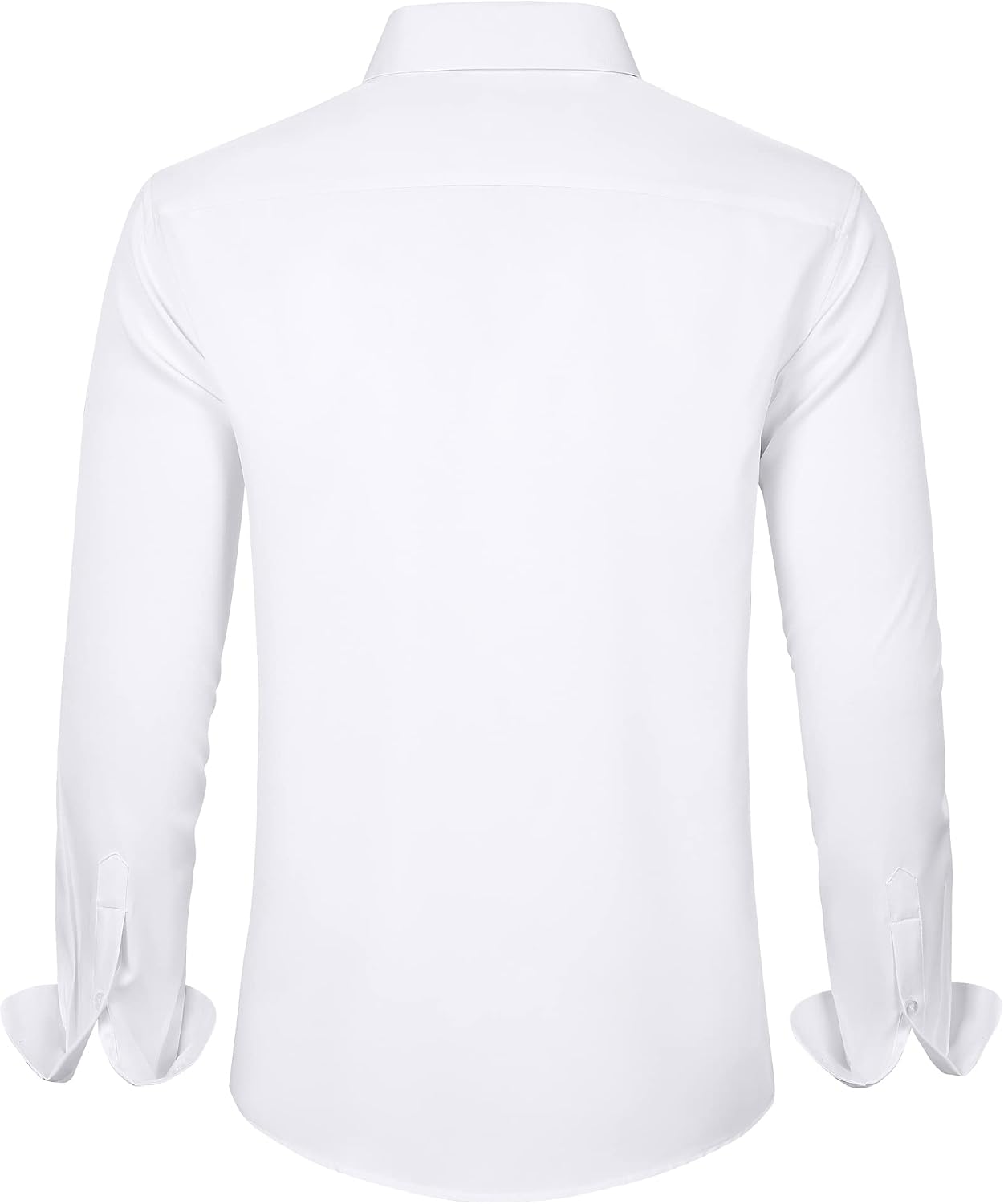
If you’ve ever ruined a dress shirt at a work lunch — or spent a Sunday ironing a collar that refuses to lie flat — you’ve probably wondered whether “tech” dress shirts are worth the hype. This category covers shirts engineered with specific functional finishes or fabric blends: stain-repellent coatings that cause liquid to bead and roll off, and stretch weaves that allow a full range of motion without the shirt pulling across your shoulders or untucking mid-meeting. These aren’t gimmicks borrowed from athletic wear — they’re a legitimate response to the reality of modern professional life, where a single shirt might go from a 9 a.m. video call to a client lunch to an after-work event. This article compares three shirts that show up repeatedly in this conversation — J.VER Stain Shield, J.VER Standard Stretch, and Van Heusen Flex Collar Stretch — and adds context on BEILU for buyers who care specifically about collar performance. By the end, you’ll have a clear decision frame for which shirt fits your actual use case.
| EDITOR'S PICKVan Heusen Mens Dress Shirt Reg… | Mid-tierJ.VER Men's Dress Shirts Stretc… | Budget pickBEILU Stretch Mens Slim Fit Dre… | |
|---|---|---|---|
| Stretch | — | ✓ | ✓ |
| Stain shield | — | ✓ | — |
| Fit | Regular | — | Slim |
| Size | 17.5 neck | X-Large | Medium |
| Color | White | Black | White |
| Price | $55.00 | $19.99 | $12.99 |
| See on Amazon → | See on Amazon → | See on Amazon → |
What “Tech Features” Actually Mean in a Dress Shirt
Before comparing brands, it’s worth being precise about what these features are and what they are not.
Stain shield / stain repellency refers to a surface treatment — typically a durable water repellent (DWR) finish applied to the fabric after weaving. It doesn’t make the shirt stain-proof; it creates a temporary barrier that causes liquid to bead and roll off before it soaks into the fibers. The operative word is “temporary” — this finish degrades with washing and heat, though manufacturer care instructions are designed to slow that degradation. The protection is real but not permanent.
Stretch in a dress shirt context usually comes from one of two sources: a small percentage of elastane (also sold as spandex or Lycra, typically 2–5%) blended into the cotton, or a looser, more flexible weave construction. Elastane-blend stretch gives you four-way movement and snaps back to shape. Weave-based stretch is subtler and drapes more like traditional shirting. Neither looks like athletic wear if the cut is right — but the distinction matters for how the shirt ages and how it photographs.
Poplin — the weave used in most Van Heusen dress shirts — is a plain, tightly woven cotton fabric with a smooth, slightly crisp surface. It’s the default dress shirt fabric because it looks sharp and photographs cleanly. The trade-off is that it’s thin, which means it can become translucent in bright light.
Understanding these definitions tells you most of what you need to know about where each shirt will succeed and where it won’t.
The Stain Shield Test: What J.VER Owners Actually Report
The most credible data point in this category comes from owners, not marketing copy. Across aggregated reviews of the J.VER Stain Shield dress shirt, the pattern that stands out is specificity: buyers aren’t reporting that the shirt “resisted stains” in the abstract — they’re describing real incidents. One owner account, cited repeatedly in review summaries, describes dropping marinara sauce on the shirt during a team lunch. According to that owner, the sauce beaded on the surface and wiped away cleanly without leaving a mark. That’s exactly the scenario the stain-shield finish is designed for: a sudden, liquid-forward food spill caught quickly, before it has time to penetrate the fabric.
Wirecutter’s review coverage of performance dress shirts — published under the title “The Best Dress Shirts” — notes that DWR-style treatments perform best in the first several dozen wash cycles, with efficacy declining unless shirts are tumble-dried on low heat, which helps reactivate the finish. This aligns with what J.VER owners report: the protection is real in the early life of the shirt, and care discipline matters for preserving it.
What the stain shield does not do, according to owner accounts: it won’t save a shirt from oil-based stains that sit for several hours, and it provides no protection against ink or dye transfers. The realistic use case is the fast-moving lunch or meeting scenario — a splash, a drop, a spill that gets addressed within minutes. For that specific scenario, reviewers consistently say it works.
The practical implication: if your primary concern is a one-time formal event — a wedding, a job interview, a presentation — the stain shield earns its place. If you’re buying a shirt you’ll wear twice a week for two years, the shield’s degradation timeline is worth factoring in.
How the Three Shirts Compare: Feature by Feature
J.VER Stain Shield — Best for High-Stakes Single Events
BEILU
$12.99
In stock on Amazon
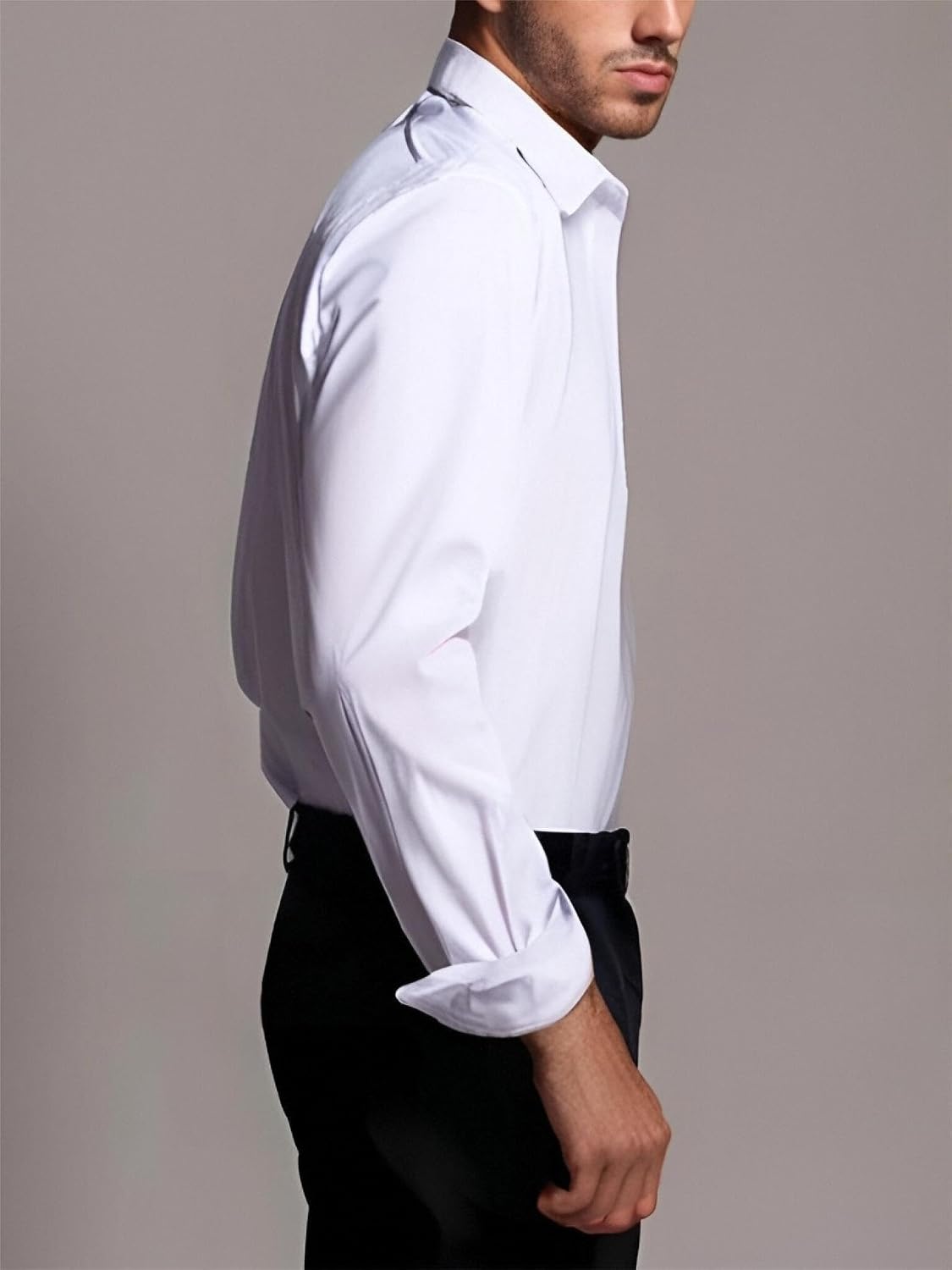
Check price on AmazonThe J.VER Stain Shield earns its place for buyers facing a specific, foreseeable risk: a formal occasion where a food or drink spill would be genuinely damaging — an interview, a client dinner, a wedding where you’re in the photos. The DWR coating is the headline feature, but owners also consistently praise the fabric weight. Unlike the thinner poplin options in this price range, the Stain Shield reads as medium-weight: opaque in most lighting conditions, with a hand feel that reviewers describe as soft rather than stiff. The stain-shield finish does degrade with washing; following care instructions — particularly tumble-drying on low heat rather than air-drying — extends its effective life. For the buyer who needs confidence on one big day, this shirt delivers it cleanly.
Owner pattern: Buyers who purchased for a specific event (interviews, rehearsal dinners, client-facing travel days) report high satisfaction. Buyers expecting the coating to remain fully effective after a year of regular washing temper their expectations accordingly.
BEILU
$12.99
In stock on Amazon
Check price on AmazonJ.VER Standard Stretch — Best for the Working Wardrobe
J.VER
$19.99
In stock on Amazon
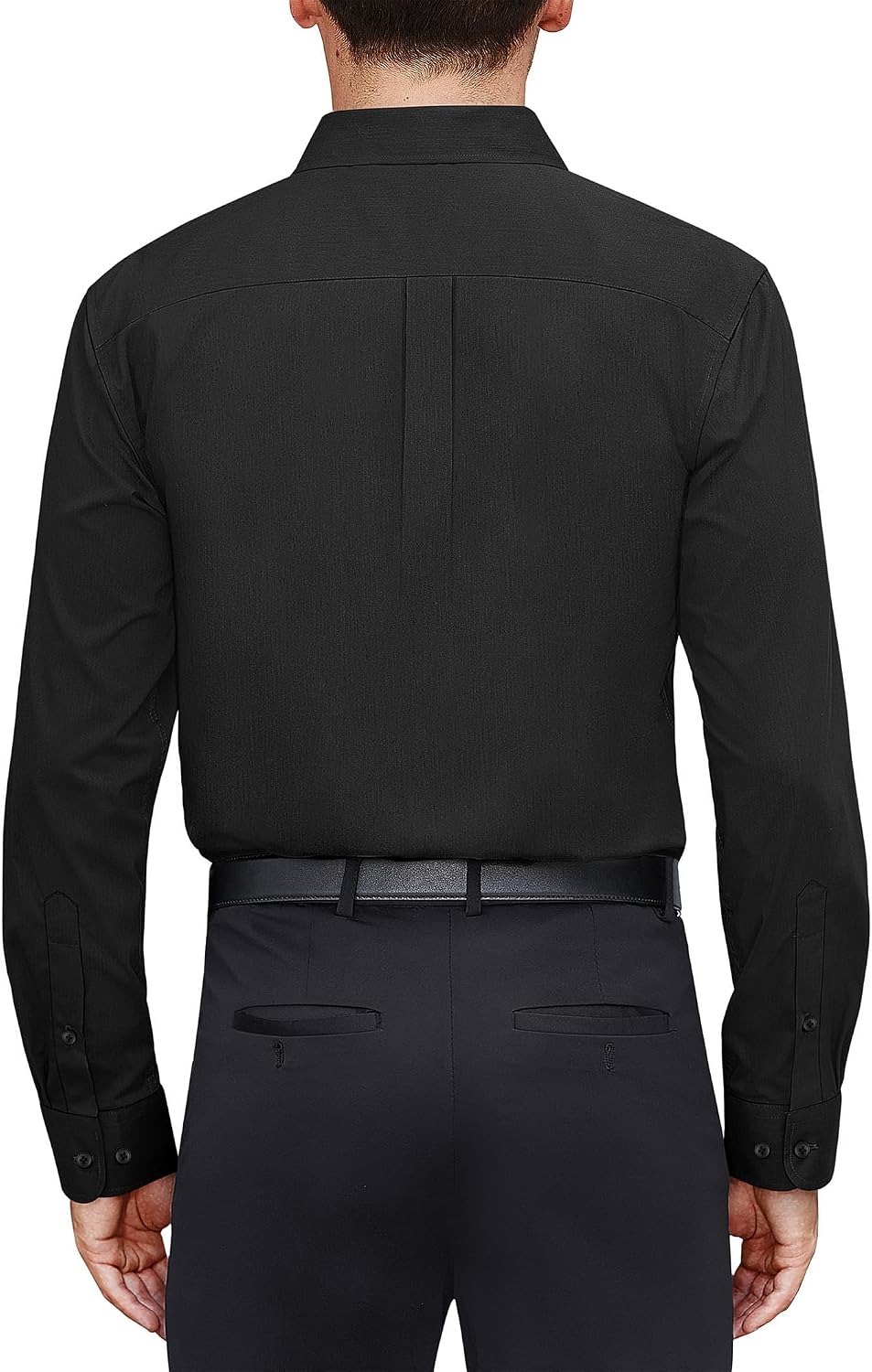
Check price on AmazonThe J.VER Standard Stretch — the non-stain-shield variant — earns a specific phrase in owner reviews with notable consistency: “looks more expensive than it is.” That’s a meaningful signal, because it suggests the shirt is passing a visual inspection above its price tier. What appears to drive that perception is fabric weight. While Van Heusen’s poplin registers as thin to some owners, J.VER Standard Stretch reviewers repeatedly describe the fabric as “soft, not thin” — a distinction that matters for drape, for opacity, and for how the shirt photographs.
Business of Fashion’s trend analysis, “Performance Fabrics Enter the Office,” notes that the growth of performance dress shirts has been driven precisely by this gap: buyers want shirts that behave technically but look traditionally formal. The Standard Stretch fits that description. Owners report consistent sizing across neck and sleeve measurements, good shape retention after multiple machine washes, and a stretch that reads as ease of movement rather than athletic construction. The shirt doesn’t look like it’s trying to be technical — it looks like a dress shirt that happens to fit well.
For buyers assembling two to four shirts for a hybrid workweek, this is the pick that holds up across repeated wears and washes without requiring dry-cleaning or special handling.
J.VER
$19.99
In stock on Amazon
Check price on AmazonVan Heusen Flex Collar Stretch — Best for Availability and Traditional Office Environments
J.VER
$19.99
In stock on Amazon
Check price on AmazonVan Heusen’s Flex Collar Stretch occupies a specific position in this market: it’s widely available, consistently priced accessibly, and delivers a professional appearance that reads well in most office environments. GQ’s editorial roundup “The Best Dress Shirts for Men” has historically noted Van Heusen as a reliable entry point for buyers who prioritize appearance and availability. Esquire’s buyer’s guide “The Best Dress Shirts You Can Buy Right Now” places poplin at the “workhorse” end of dress shirt fabrics — clean, professional, uncontroversial — with the caveat that fabric weight varies significantly by price tier.
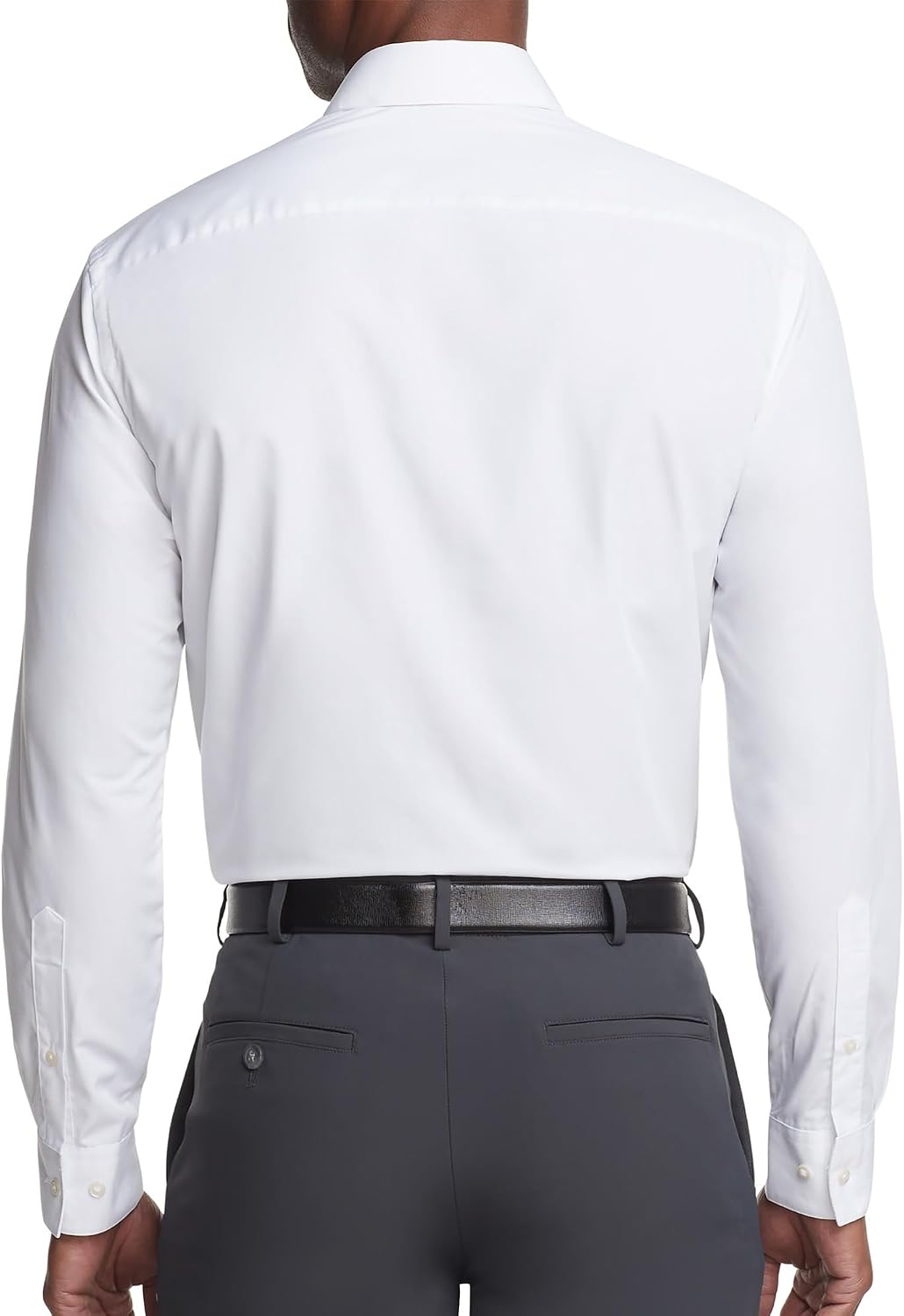
The honest trade-off, which owners raise consistently: the poplin weave runs thin. In bright lighting conditions — sunlit conference rooms, outdoor events, direct flash photography — the fabric can become more translucent than buyers expect. Multiple reviewers across aggregated purchase data note they reach for an undershirt with the Van Heusen when wearing it in formal or photographed settings. This isn’t a defect — it’s a property of poplin construction at this price point.
The stretch component in the Flex Collar is functional and discreet. Owners describe it as noticeable in the sense that they don’t feel constrained across the shoulders or at the collar button — not noticeable in the sense of looking like a performance fabric. The collar flex specifically addresses the most common complaint about fitted dress shirts: the collar button that feels like a tightening band by 2 p.m. Reviewers consistently praise this feature as the shirt’s most practical differentiator. If maximum retail availability and an easy return process matter to you — or if you need a shirt that will pass a traditional office dress code without question — the Van Heusen is a defensible choice. Just plan for an undershirt if the lighting situation is unpredictable.
J.VER
$19.99
In stock on Amazon
Check price on AmazonBEILU — Best for Collar-Specific Performance
Van
$55.00
In stock on Amazon
Check price on AmazonBEILU enters this comparison in a narrower lane: buyers who have strong opinions about collar behavior. Owner reports for BEILU consistently mention that the collar holds its shape well after ironing and starching, with less collar roll — the tendency of collar points to curl upward rather than lying flat against the chest — than they’ve experienced with other shirts in this price range.
Collar roll is a fit-and-construction issue, not just a fabric issue. It’s influenced by the interlining (the hidden layer inside the collar that gives it structure), the collar point length, and the weight of the fabric. BEILU owners note this shirt rewards light maintenance: a quick press and a touch of spray starch keeps the collar performing across a full workday. For buyers who care about this specific detail — creative directors, architects, anyone who knows a collapsed collar reads as inattentive in a client-facing environment — this is a meaningful differentiator.
Sizing guidance from BEILU reviewers: use the brand’s measurement chart rather than defaulting to your usual shirt size. The fit is accurate when sized properly, but buyers who skip the measurement step report more mixed results.
Van
$55.00
In stock on Amazon
Check price on AmazonFeature Summary at a Glance
| Feature | J.VER Stain Shield | J.VER Standard Stretch | Van Heusen Flex Collar | BEILU |
|---|---|---|---|---|
| Primary tech feature | DWR stain repellency | Elastane-blend stretch | Flex collar + stretch weave | Collar structure + shape retention |
| Fabric feel (owner reports) | Soft, medium weight | ”Soft, not thin” | Clean, slightly thin | Medium weight, structured |
| Undershirt needed? | Rarely reported | Rarely reported | Sometimes reported | Rarely reported |
| Wash-and-wear reliability | Strong (early cycles) | Strong | Strong | Strong with light maintenance |
| Best use case | Single high-stakes event | Working wardrobe rotation | Traditional office, max availability | Collar-conscious buyers |
Frequently Asked Questions
Does the J.VER stain shield actually work on real food and drink spills? Based on owner accounts, yes — within its specific parameters. The marinara incident reported by multiple reviewers is the clearest real-world evidence: liquid-based spills caught quickly bead and wipe away. Oil-based stains that sit, or anything that penetrates before you can address it, are a different story. Treat it as a first line of defense for fast spills, not a guarantee against all staining.
Do any of these shirts require an undershirt because they’re see-through? Van Heusen owners raise this most frequently, specifically in bright light or photography situations. J.VER reviewers rarely mention it — the fabric weight appears to provide more opacity. BEILU owners don’t flag this as an issue. If you’re buying for a photographed event (wedding, headshots, formal presentation), an undershirt is a reasonable precaution with any white poplin shirt.
How do these shirts hold up after multiple machine washes? Across aggregated reviews, all three brands show reasonable shape retention through standard machine-wash cycles on cold or warm settings. Owners report minimal shrinkage when following care labels. The J.VER Stain Shield’s coating does degrade with washing — tumble drying on low helps preserve it, per manufacturer guidance and owner experience.
Which shirt runs most true to size across neck and sleeve measurements? J.VER Standard Stretch owners consistently report accurate sizing with minimal discrepancy between labeled and actual measurements. Van Heusen sizing is widely regarded as reliable given the brand’s long production history. BEILU reviewers note sizing is accurate when buyers use the brand’s measurement guide rather than defaulting to their usual shirt size.
Is the stretch noticeable in a positive way, or does it look like stretch fabric? Owners across both J.VER and Van Heusen describe the stretch as functionally apparent — you feel it when you move — but visually invisible. The shirts photograph as conventional dress shirts. The concern that stretch will look athletic or casual does not appear to be borne out in owner experience at these weave compositions.
Can these be worn untucked and still look intentional? This depends more on cut than on fabric technology. Reviewers who wear these shirts untucked generally note a hem that falls slightly long for a clean untucked line — a common issue with traditionally cut dress shirts. If untucked wear is a priority, buyers report better results sizing down one size in the body or looking specifically for shirts marketed with a “casual” or “untucked” hem cut.
The Decision Frame
If your use case is a single high-stakes event — a job interview, a wedding, a client dinner where you know the food is adventurous — J.VER Stain Shield is the clearest choice. The stain protection is real, the fabric reads as formal, and the peace of mind is worth the slight premium over a standard shirt.
If you’re building a working wardrobe and need two to four shirts that perform reliably across a hybrid week, J.VER Standard Stretch earns the pick. Owners consistently report it looks above its price point, the stretch is discreet, and the fabric weight avoids the translucency issue that Van Heusen buyers occasionally flag.
If you need maximum availability, a trusted return policy, and a shirt that will look sharp in a traditional office environment, Van Heusen Flex Collar Stretch is a defensible choice — just plan for an undershirt if the lighting situation is unpredictable.
If collar performance is your specific pain point — you’ve dealt with collar roll before and it bothers you — BEILU is worth a look, with the understanding that light maintenance (a quick press, some starch) is part of the relationship.
The tech features in this category are real. They’re not luxury-level solutions, and they have limits. But for the buyers who need reliability without dry-cleaning dependency, they solve real problems at an honest price.