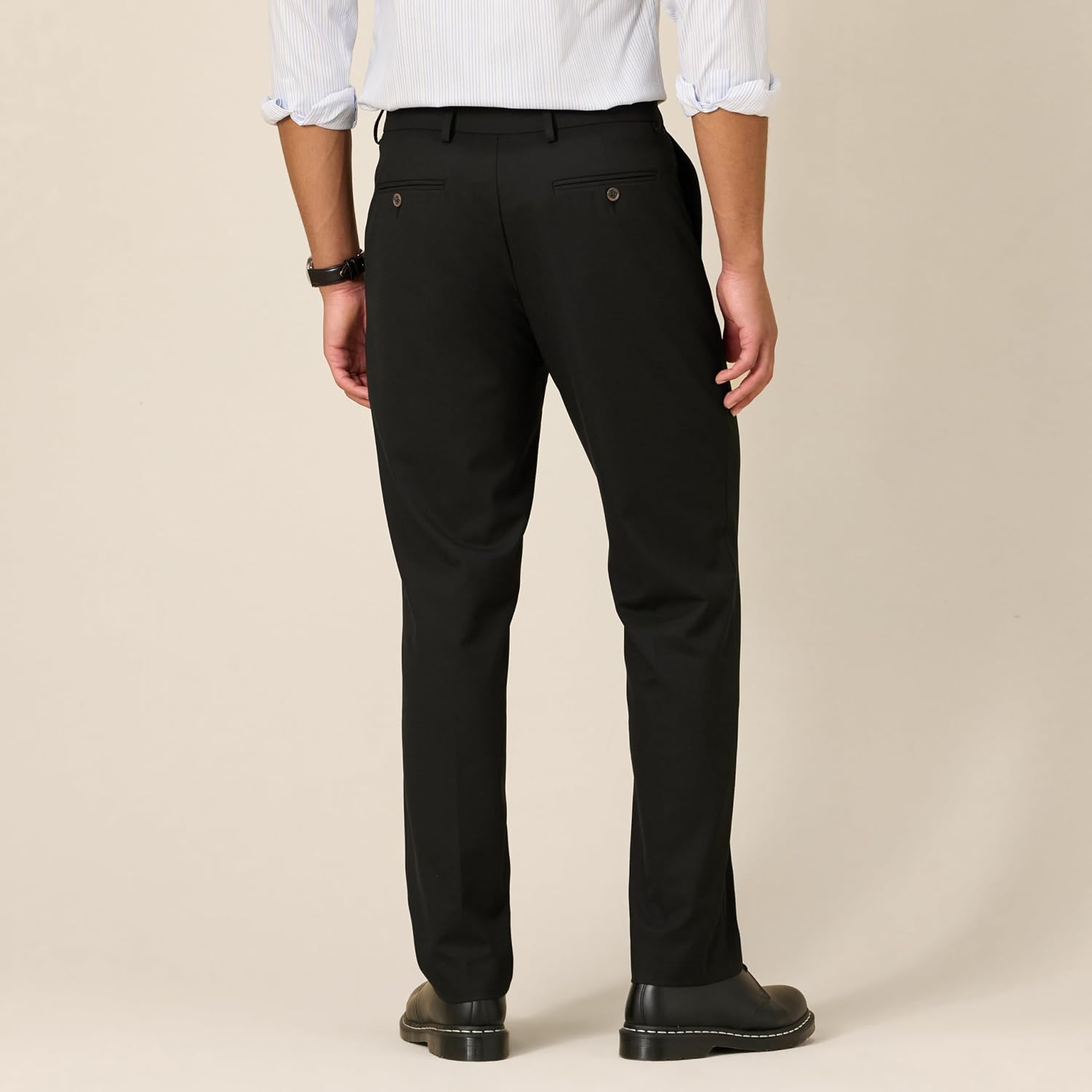
Dress pants — the tailored trousers (meaning pants with a structured waistband, a clean front, and a pressed crease down the leg) that anchor most professional wardrobes — come in a price range that runs from around $20 at fast-fashion retailers to $55 or more at mid-tier mall brands and direct-to-consumer labels. If you’re building a work wardrobe on a realistic budget, that spread matters. But here’s what most guides skip: the price difference doesn’t always show up where you’d expect. It’s rarely about how the pants look on a hanger. It shows up in how they hold their shape after three wears, how the waistband behaves after lunch, and whether the fabric pills (forms small fuzzy balls from friction) by month two. This article breaks down what each tier actually delivers in fabric, construction, and fit — so you can make a clear call before you buy.
The $20 Tier: What You’re Actually Getting
Construction and Fabric at the Budget End
At the $20 price point — think fast-fashion retailers and big-box house brands — you’re primarily paying for styling and novelty, not materials or build quality. The fabric is almost always a high-polyester blend, often 80–100% synthetic, with a tight, smooth surface that photographs well but doesn’t breathe.
Owners who review these pants consistently report that the fabric feels stiff or plasticky against the skin, especially in warmer office environments. The waistband, which at this tier is typically a single-layer cut-and-sew construction rather than a fused (bonded for rigidity) or curtain-lined (backed with woven interfacing) waistband, tends to roll or buckle after a few hours of sitting. GQ’s editorial feature “The Best Dress Pants for Men” notes that waistband construction is one of the earliest visible signals of quality, and at sub-$25 pricing it is almost universally simplified.
The seams — specifically the inseam (the seam running up the inside of each leg) and the seat seam — are typically sewn with a single-needle run stitch rather than a flat-felled or double-needle construction. Single-run seams are faster to produce but fray and split under stress more quickly. Business of Fashion’s piece “Fast Fashion’s Hidden Costs in Tailoring” identifies inseam integrity as one of the most common failure points in budget-tier trousers, often appearing after just eight to twelve wears.
Fit vocabulary at this tier: Fast-fashion brands tend to label fits loosely — “slim,” “straight,” and “relaxed” often mean different things within the same brand’s catalog. At $20, the block (the underlying cut template) is typically graded from a single base pattern rather than adjusted for different body proportions, so a size 32x30 “slim” may fit very differently in the seat or thigh than a comparable size from a mid-tier brand. Esquire’s editorial “How to Buy Dress Pants That Actually Fit” specifically cautions that readers should never assume “slim” translates consistently across price tiers.
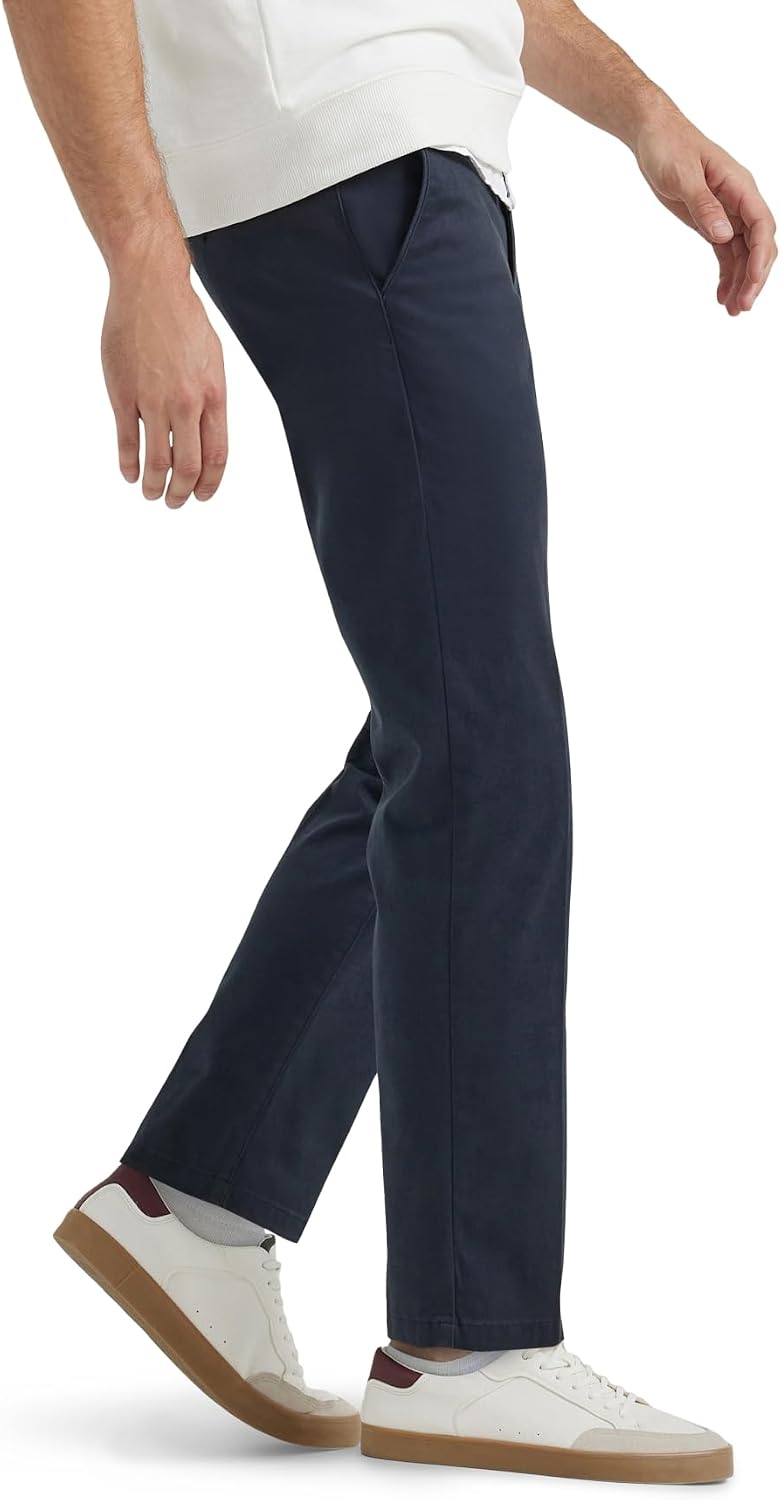
Lee
$17.61
In stock on Amazon
Check price on AmazonThe $35–$55 Tier: Where the Gap Opens Up
Fabric First — That’s Where the Money Goes
This is the range that rewards closer attention, because the delta between a $38 pair and a $55 pair can be significant — and it isn’t always about the label. Mid-tier brands in this range include the house-brand lines at national mall retailers, direct-to-consumer workwear labels, and the entry-level offerings from brands like Banana Republic Factory and J.Crew.
At $40–$55, you start seeing two meaningful upgrades: a shift toward polyester-viscose or polyester-wool blends (wool adds natural temperature regulation and drape; viscose adds softness and fluidity), and a lower total polyester percentage — often 50–70% rather than 80–100%. That shift in fiber content is what produces the cleaner hang that owners in this tier consistently describe. Who What Wear’s roundup “The Best Affordable Work Pants That Look Expensive” cites drape and hang as the most-mentioned positive attribute in mid-range trouser reviews, and that’s a direct result of blended-fiber construction.
Construction Upgrades Worth Naming
At $40+, several build details become more common:
- Curtain lining or fused waistband: A bonded or woven backing that keeps the waistband flat and structured across a full workday.
- Flat-felled inseam: This construction folds and stitches the seam allowance flat against the fabric rather than leaving raw edges sewn together, which dramatically extends seam life. It’s visible as a small ridge on the inside of the leg.
- Bar tacks at stress points: Small reinforcing stitches at pocket corners and waistband joins. They add essentially zero cost to produce but are frequently absent at $20 and increasingly present at $45+.
Fit at this tier: The blocks are typically better differentiated. A brand selling pants at $50 has more invested in fit satisfaction — returns are expensive — so the “slim,” “straight,” and “athletic” cuts are more likely to reflect meaningful pattern differences. That said, as Esquire’s “How to Buy Dress Pants That Actually Fit” notes, “relaxed” and “modern” remain the two most variable descriptors across brands at any price, and a tape measure is still your best purchase tool.
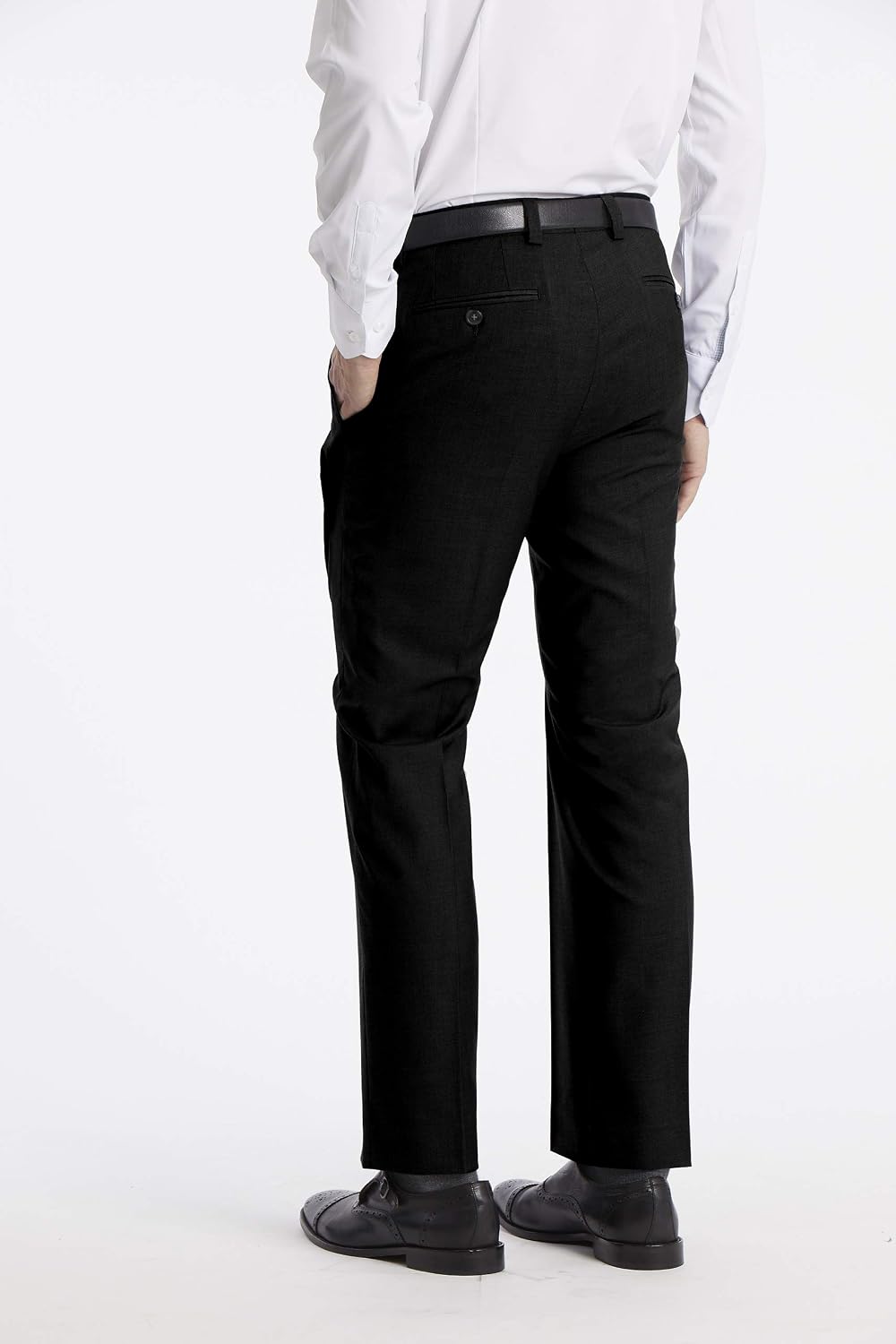
Calvin
$39.99
In stock on Amazon
Check price on AmazonThe $55+ Tier: What You’re Actually Buying Into
Materials and Longevity at the Upper-Mid Range
At $55 and above — still well below the threshold of true tailoring or suiting fabric — you begin to see wool-polyester blends and viscose-polyester combinations that hold a pressed crease reliably across multiple wears and dry cycles. The polyester content typically drops to 40–55%, with the remaining percentage split between wool and a softening fiber like viscose or modal.
This matters in three practical ways. First, natural fibers regulate temperature more effectively, which means less visible perspiration discomfort during long office days. Second, wool’s natural crimp fiber structure resists pilling far better than polyester alone — the small fuzzy balls that appear on the thighs and seat of lower-tier pants after a month of regular wear are almost entirely a polyester-content problem. Third, blended fabrics with meaningful wool content respond better to steaming and pressing, which means you can refresh the crease with a handheld steamer at home rather than sending them to a dry cleaner each time.
Construction at this tier typically includes full curtain lining in the waistband, flat-felled inseams throughout (not just at the seat), and hand-stitched or bartacked reinforcement at all stress points. GQ’s “The Best Dress Pants for Men” editorial specifically flags these finishing details as the clearest differentiator between a $55 trouser and a $90+ trouser when comparing product specifications side by side.
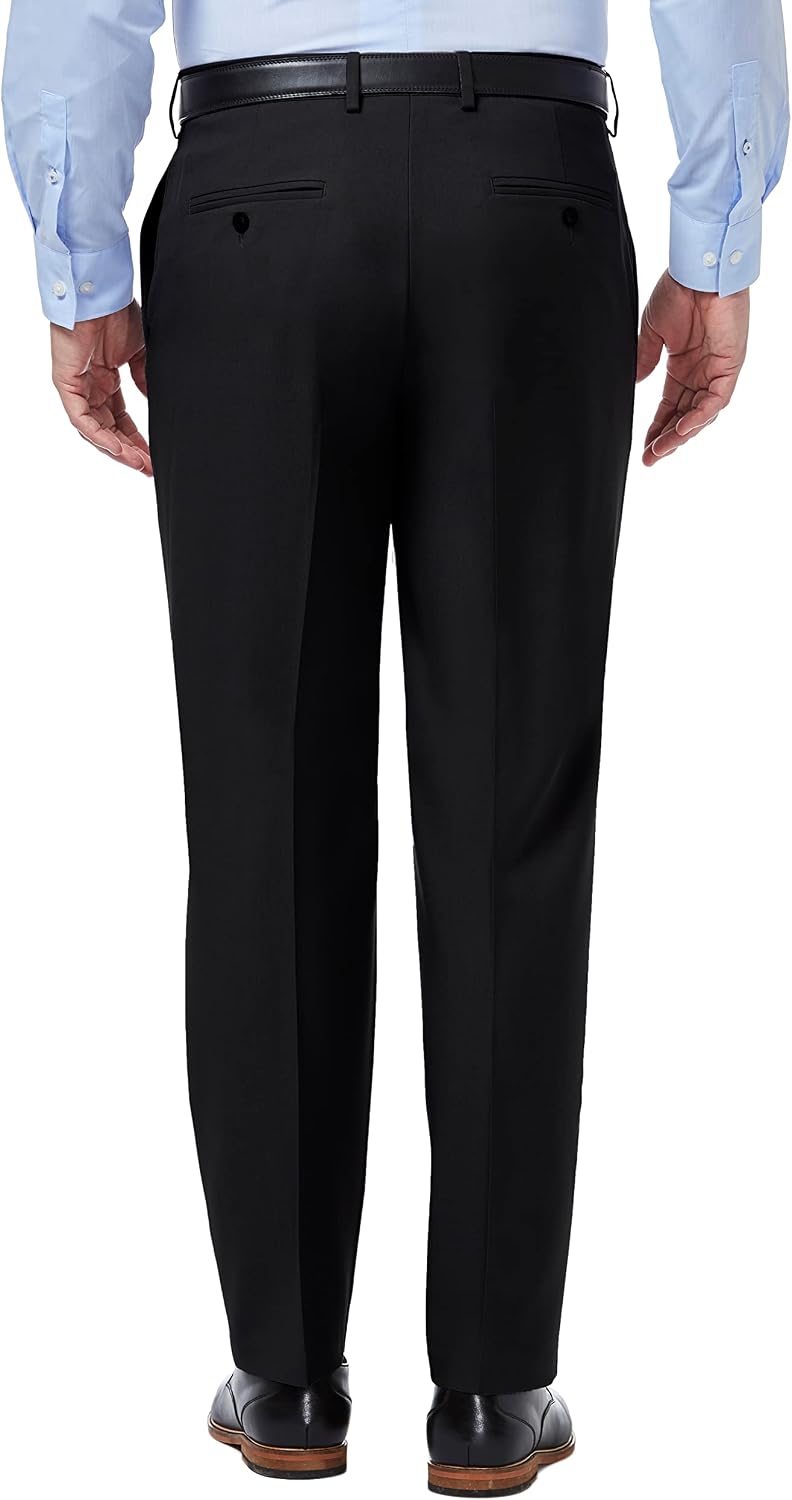
Haggar
$52.50
In stock on Amazon
Check price on AmazonBy the Numbers
| Price Point | Typical Fabric | Waistband Build | Inseam Construction | Expected Wearable Life |
|---|---|---|---|---|
| ~$20 Lee — $17.61 | 80–100% polyester | Single-layer cut-and-sew | Single-needle run stitch | 8–15 wears before visible degradation |
| ~$35–$45 Calvin — $39.99 | 50–70% polyester blend | Fused or light curtain lining | Double-needle or flat-felled | 30–50 wears with typical care |
| ~$55 Haggar — $52.50 | Wool-poly or viscose-poly blend | Full curtain lining | Flat-felled; bar tacks at stress points | 60–90+ wears; holds crease reliably |
Sources: published fabric and construction specs from brand product pages; aggregated reviewer notes compiled across GQ’s “The Best Dress Pants for Men” editorial and Who What Wear’s “The Best Affordable Work Pants That Look Expensive” reviewer roundup.
The Decision Frame: If X, Then Y
Here’s where the rubber meets the road. The tier question isn’t just “what’s better” — it’s “better for what specific use case.”
If you’re wearing these pants fewer than 12 times in six months: The $20–$35 pair is the rational call. You won’t exhaust the wearable life, and visible degradation — waistband roll, seat stretch, fabric pilling — won’t accumulate to the point where it affects your professional presentation. Budget the money you save toward shoes or a jacket instead; those have higher visual impact per dollar.
If you’re wearing them 2–3 times per week in a client-facing or in-office role: The $45–$55 tier is where the math flips. At three wears per week, you’ll hit the degradation threshold of a $20 pair inside six to eight weeks. A $50 pair, based on the construction differences outlined above, should carry you comfortably through six months of that rotation before showing wear. That’s a cost-per-wear advantage of roughly 4:1 — which makes the $50 pair the genuinely cheaper option over a 12-month horizon.
If you’re building a two-pair rotation on a tight budget: Spend unequally. Put $55 toward the pair in your most-worn neutral (charcoal or navy), and $25–$30 toward a backup in a secondary color (medium grey or olive). The primary pair absorbs most of the wear; the secondary pair is your relief valve and doesn’t need to hold up to the same cycle count.
If you’re considering a $90+ pair: That’s a separate tier with different tradeoffs — principally heavier wool and wool-linen blends that perform better across seasons but typically require dry cleaning, plus full lining construction and brand-archive fit records that support confident repeat purchases. The principle holds, though: the jump from $55 to $90 is primarily about longevity and material quality, not styling alone.
What to Check Before You Click “Buy”
Whether you’re shopping in-store or online, these four quick checks cut through the pricing noise:
-
Fiber content label. Always disclosed by law. Look for it in the product listing under “Materials” or “Fabric.” A blend with at least 20–30% natural fiber — wool, viscose, or cotton — at $40–$55 signals that the brand invested in material rather than just silhouette.
-
Waistband photo. Most product pages include detail shots. Look for visible structure: a waistband that sits flat and has a defined top edge. A floppy or thin-looking waistband in the photo will perform accordingly in wear.
-
Return window. At $20, a generous return window is table stakes because you’re making an educated guess. At $50, look for at least 30 days — enough time to wear them twice and wash them once before committing.
-
Reviewer language patterns. In aggregated reviews, weight these phrases heavily: “still look new after X months,” “holds a crease,” “waistband doesn’t roll.” Flag these: “pilled quickly,” “baggy after a few wears,” “seam came apart.” As both GQ’s dress-pants editorial coverage and Who What Wear’s reviewer roundups have noted, these construction-specific phrases are more predictive of long-term performance than star ratings alone.
The $20-versus-$55 question isn’t really about quality in the abstract. It’s about matching spend to actual use frequency — and knowing exactly which construction details you’re trading away when you shop at the lower end. Now you do.