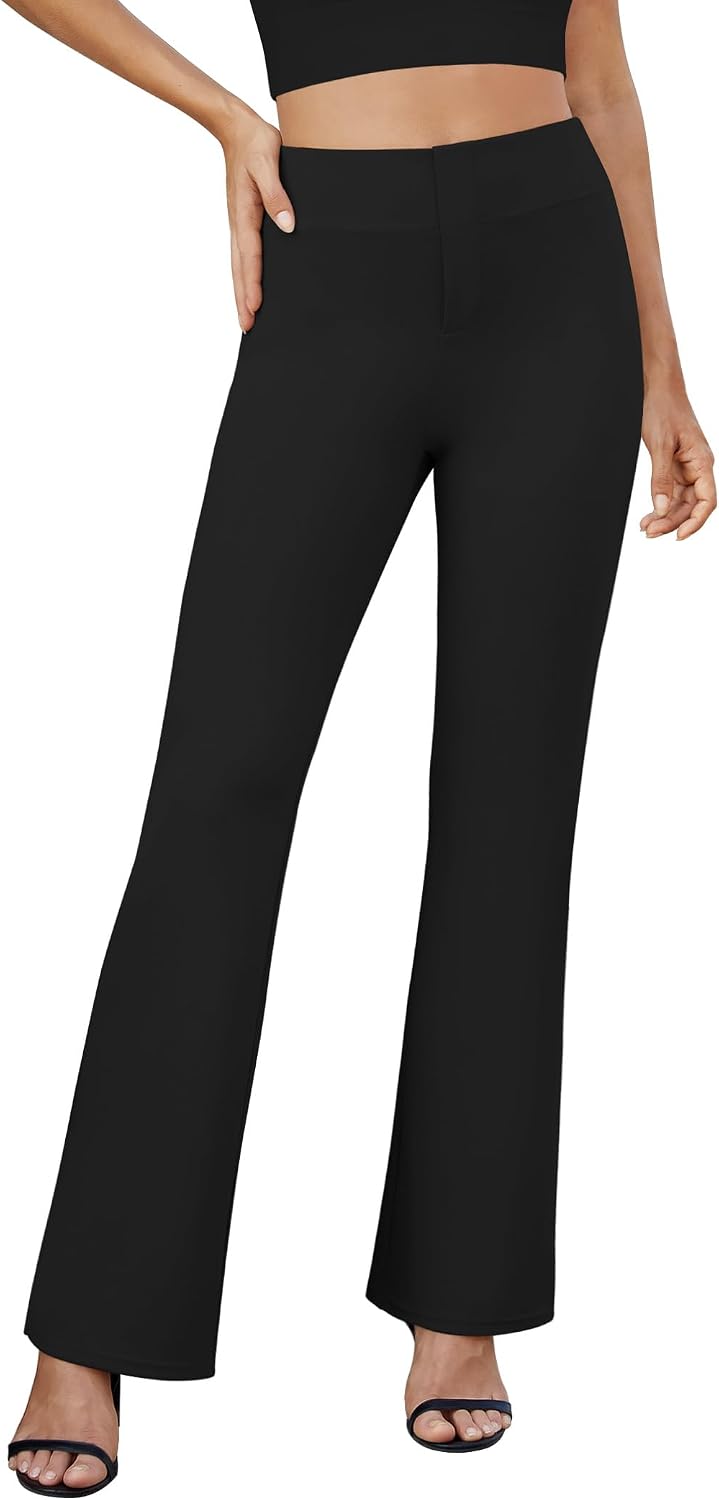
If you’ve spent any time navigating workwear in 2025 and 2026, you’ve probably noticed that trouser silhouettes feel like a moving target. Wide-leg trousers (a style where the leg opening is very wide, often 22 inches or more at the hem) dominated the trend conversation for several seasons. Straight-leg trousers — cut uniformly from hip to hem — became the minimalist default. And somewhere in that noise, the bootcut trouser got quietly underrated. A bootcut pant is simply a fitted or tapered pant from the hip through the knee that then flares slightly at the ankle — typically 17 to 20 inches at the hem — just enough to skim over a boot heel or a block-heeled pump without bunching. That subtle flare is not a trend flourish; it’s an engineering decision, and it solves a specific set of problems that straight-leg and wide-leg cuts simply don’t. This article builds a practical, comparison-driven case for why the bootcut dress pant deserves a permanent position in a professional wardrobe, which price tiers deliver the best returns, and exactly when to reach for them over the competition.
| EDITOR'S PICKFishers Finery Women's Ecofabri… | Mid-tierLee Women's Ultra Lux Comfort w… | Budget pick[DLOODA Womens Bootcut Dress Pan…](https://www.amazon.com/dp/B0DN6QQ845?tag=greenflower20-20) | |
|---|---|---|---|
| Fit type | Pull On | — | Pull On |
| Length | 32" | — | — |
| Material | Ponte Knit | — | — |
| Closure | Pull On | — | Pull On |
| Pockets | — | — | ✓ |
| Price | $71.00 | $27.65 | $19.99 |
| See on Amazon → | See on Amazon → | See on Amazon → |
Why the Bootcut Silhouette Solves Problems Other Trouser Cuts Don’t
Start with the underlying geometry. A straight-leg trouser sits well on a narrow frame at rest but tends to break awkwardly over footwear — the fabric pools or creases at the ankle when you’re standing in a meeting or walking to a client presentation. A wide-leg trouser looks polished in editorial photographs and at still moments, but reviewers at Who What Wear consistently note that wide-leg cuts require careful heel height management: wear them with flats and the hem drags; wear them with a kitten heel and the proportion reads as off unless the rise (the distance from waistband to crotch seam) is perfectly calibrated.
The bootcut sidesteps both problems. The slight flare at the hem creates what tailors call a “visual line continuation” — the fabric moves in a clean diagonal from the knee to the floor, optically lengthening the leg regardless of heel height. Vogue’s 2024 feature on the bootcut trouser’s return specifically cites this proportion flattery as the reason the silhouette has sustained across multiple decades of office dressing while trend-driven cuts cycle in and out.
There’s also a practical layering argument. Bootcut trousers are the only dress-pant silhouette that sits cleanly over tall shaft boots (boots where the shaft rises to mid-calf or knee), an ankle boot with a stacked heel, or a pointed-toe pump — without requiring a hem alteration for each shoe type. Reviewers at The Cut who cover office wardrobes repeatedly return to this point: a single great bootcut pant effectively replaces what would otherwise be two or three straight-leg trousers hemmed to different lengths.
The Price-Tier Breakdown: What $80 vs. $250 vs. $500 Actually Buys
The bootcut market spans a wide range, and the quality signals are specific enough to be worth mapping.
Entry tier ($60–$130): Brands like Banana Republic, Ann Taylor, and Vince Camuto produce bootcut dress pants at this range in polyester-viscose blends (synthetic fabrics that mimic the drape of wool without the cost). Harper’s Bazaar’s 2025 workwear round-up notes that this tier delivers acceptable shape retention for 12–18 months of regular wear, but the fabric tends to pill (develop small surface fuzz balls from friction) at the inner thigh and seat after consistent use. The construction at this tier is typically fused rather than sewn — meaning the interfacing (the inner structural layer that helps a waistband hold its shape) is glued rather than stitched — which shortens the garment’s lifespan under dry-cleaning cycles.
Mid tier ($150–$320): This is the most competitive zone right now. COS, Massimo Dutti, Reiss, and Club Monaco all offer bootcut trousers in this range, typically in wool-blend or ponte fabric (ponte is a dense, double-knit fabric with slight stretch that holds its structure very well). Owners consistently report that the ponte constructions at Massimo Dutti and Reiss in particular hold a pressed crease through a full workday without re-pressing, which matters for anyone moving between desk work, commuting, and evening client dinners. At this tier, construction shifts to partly sewn interfacing and reinforced seat seams — the details that determine whether a trouser lasts two years or five.
Investment tier ($380–$700+): Brands like Theory, Joseph, Vince, and Sandro’s workwear line occupy this space. Here the fabric story changes meaningfully: wool-crepe and Italian wool-blend fabrics (fine, tightly woven woolen textiles that drape with more natural weight than synthetics) appear regularly. Refinery29’s 2024 bootcut feature highlights Theory’s Treeca pant — a slim bootcut in a stretch wool blend — as a consistent editorial reference point for this tier, specifically because the fabric weight (typically around 280–320 GSM for those who track fabric density) provides structure without stiffness. At the investment tier you’re also buying resale durability: bootcut trousers from Theory and Vince in near-mint condition routinely appear on The RealReal and Vestiaire Collective at 40–55% of retail, a resale retention rate that mid-tier synthetics rarely approach.
By the numbers
| Tier | Typical fabric | Expected lifespan (regular wear) | Resale retention |
|---|---|---|---|
| Entry ($60–$130) | Polyester-viscose blend | 12–18 months | Under 15% of retail |
| Mid ($150–$320) | Ponte or wool-blend | 2–4 years | 20–35% of retail |
| Investment ($380–$700+) | Wool-crepe or Italian wool blend | 4–7+ years | 40–55% of retail |
Bootcut vs. Wide-Leg vs. Straight-Leg: The Head-to-Head Decision Frame
Here’s the honest comparison that most style guides sidestep because it requires picking a winner.
Office environment legibility: Business of Fashion’s 2024 analysis of hybrid office dress codes makes the point that in client-facing roles — consulting, finance, legal, agency account management — trouser silhouette still reads as a signal of intentionality. Wide-leg trousers can read as deliberately casual or fashion-forward depending on the industry; straight-leg trousers read as precise and minimal; bootcut trousers read as classically professional without broadcasting effort. For roles where the goal is authority without ostentation, the bootcut lands in a neutral zone that almost no dress code, from business formal to smart-casual, challenges.
Footwear flexibility: This is where the bootcut wins most decisively. Straight-leg trousers require either a cropped hem (showing ankle) or a specific heel height to avoid bunching. Wide-leg trousers demand a heel — flats disappear underneath and collapse the silhouette. Bootcut trousers function cleanly with flat ankle boots, block-heeled pumps, kitten heels, and pointed-toe stilettos without requiring hem adjustment. For a professional wardrobe where the same trouser needs to go from a 7am Amtrak to a 6pm client dinner, that range matters.
Proportion across body types: Who What Wear’s dress pants round-up — one of the most heavily referenced guides in this category — specifically calls out the bootcut as the most consistently flattering silhouette across a range of proportions because the flare counterbalances hip and thigh volume in a way straight-leg trousers don’t. This is not a trend observation; it’s a construction fact that has held across multiple fashion cycles.
The one area where bootcut loses: Minimalist, architectural office environments — think agency directors at design studios, senior UX leads presenting to product teams — sometimes read the bootcut as legacy rather than current. In those contexts, a well-cut wide-leg trouser or a cropped straight-leg with a visible ankle can read as more visually aligned with the aesthetic register of the room. Knowing your room is part of this decision.
How to Shop Bootcut Dress Pants Without Getting Burned Online
The single biggest friction point in buying bootcut trousers online is that “bootcut” is not a standardized measurement across brands. A “bootcut” at J.Crew may have a 17-inch hem opening; a “bootcut” at Banana Republic may hit 19 inches. At 19 inches, the silhouette starts reading as a subtle flare; at 17 inches, it reads as barely-there. Reviewers at Refinery29 consistently recommend checking the hem circumference in the product spec sheet (usually listed under “measurements” in the product details) before purchasing.
A few additional things worth verifying before ordering:
Rise height. Mid-rise (sitting 8–9 inches above the crotch seam) is the most versatile for professional settings and layers cleanly under blazers. High-rise (10+ inches) is excellent for tucked blouses but can create visual compression under a cropped jacket if the proportions aren’t calibrated.
Fabric composition. Any percentage of spandex or elastane above 3–4% in a dress trouser tends to create a slight sheen at the seat over time, which reads as wear rather than polish. Look for wool-blend or ponte constructions where stretch comes from the weave rather than added synthetic fiber.
Inseam length options. The brands that offer at least two inseam lengths (typically a 30-inch “regular” and a 32-inch “long”) are meaningfully easier to shop online because the hem behavior — how the flare falls relative to the floor — changes significantly with even an inch of inseam difference.
The Decision Rule
If you’re building or auditing a professional wardrobe right now and trying to decide where bootcut trousers fit relative to the other silhouettes you already own, here’s a straightforward if/then frame:
If your footwear rotation includes more than one heel height and you regularly move between formal and semi-formal contexts in the same day, then a bootcut trouser at the mid or investment tier is almost certainly the highest-utility pant you can add per dollar spent.
If your office context skews toward creative or design-studio environments where minimal silhouettes are the visual norm, then prioritize a clean straight-leg or wide-leg as your primary trouser and use bootcut as a secondary option for client-facing days.
If you’re at the entry stage of building a capsule wardrobe and budget is the primary constraint, then the Banana Republic or Ann Taylor entry-tier options give you the silhouette benefit now; plan to trade up to a mid-tier ponte construction within 18 months before the fabric starts to pill.
The bootcut dress trouser isn’t a trend revival that requires defending. It’s a construction solution that has outlasted every competing silhouette for one simple reason: it resolves more real-world professional dressing problems per wear than any other cut. The evidence has been accumulating for decades. The question now is just which tier makes sense for where you are in your wardrobe build.