If you’ve ever put on a pair of pants that look tailored in the mirror but feel like comfortable leggings the moment you sit down, there’s a good chance you were wearing ponte. Ponte (short for ponte di Roma, the Italian double-knit construction that gives it its name) is a thick, structured knit fabric — typically a blend of polyester, rayon, and spandex — that holds its shape the way woven trousers do, but stretches and breathes more like athletic wear. That combination has made it a quiet staple of professional wardrobes everywhere from law offices to creative studios. This guide maps out exactly what changes as you move up the price ladder — around $18 at the entry end, $45 in the mid-range, $148 at the investment tier — so you can make a deliberate decision rather than defaulting to whatever’s in stock.
The short version: at every price point, you’re buying the same general silhouette. What you’re actually buying is how long it stays that way, how it behaves under fluorescent light, and whether it looks intentional or accidental in a client-facing room.
| EDITOR'S PICKLyssé Denim Women’s Pull-On Pon… | Mid-tierBriggs New York Women’s Pull On… | Budget pickAmazon Essentials Women's Stret… | |
|---|---|---|---|
| Rise | High Waist | — | Mid Rise |
| Leg Shape | Flare | Straight Leg | Ankle Length |
| Pockets | — | 4 Pockets | — |
| Control | Tummy Control | — | — |
| Type | Ponte Pants | — | Ponte |
| Price | $108.00 | $29.99 | $17.80 |
| See on Amazon → | See on Amazon → | See on Amazon → |
The Fabric Reality at Each Tier
Ponte is not a single fabric standard. It’s a construction method — two layers of knit bonded together — and the fiber content, weight, and finish vary enormously. Understanding those variables is the fastest way to decode price differences that can otherwise feel arbitrary.
Entry Tier: $14–$25
Typical brands: Amazon Essentials, Target A New Day, Old Navy
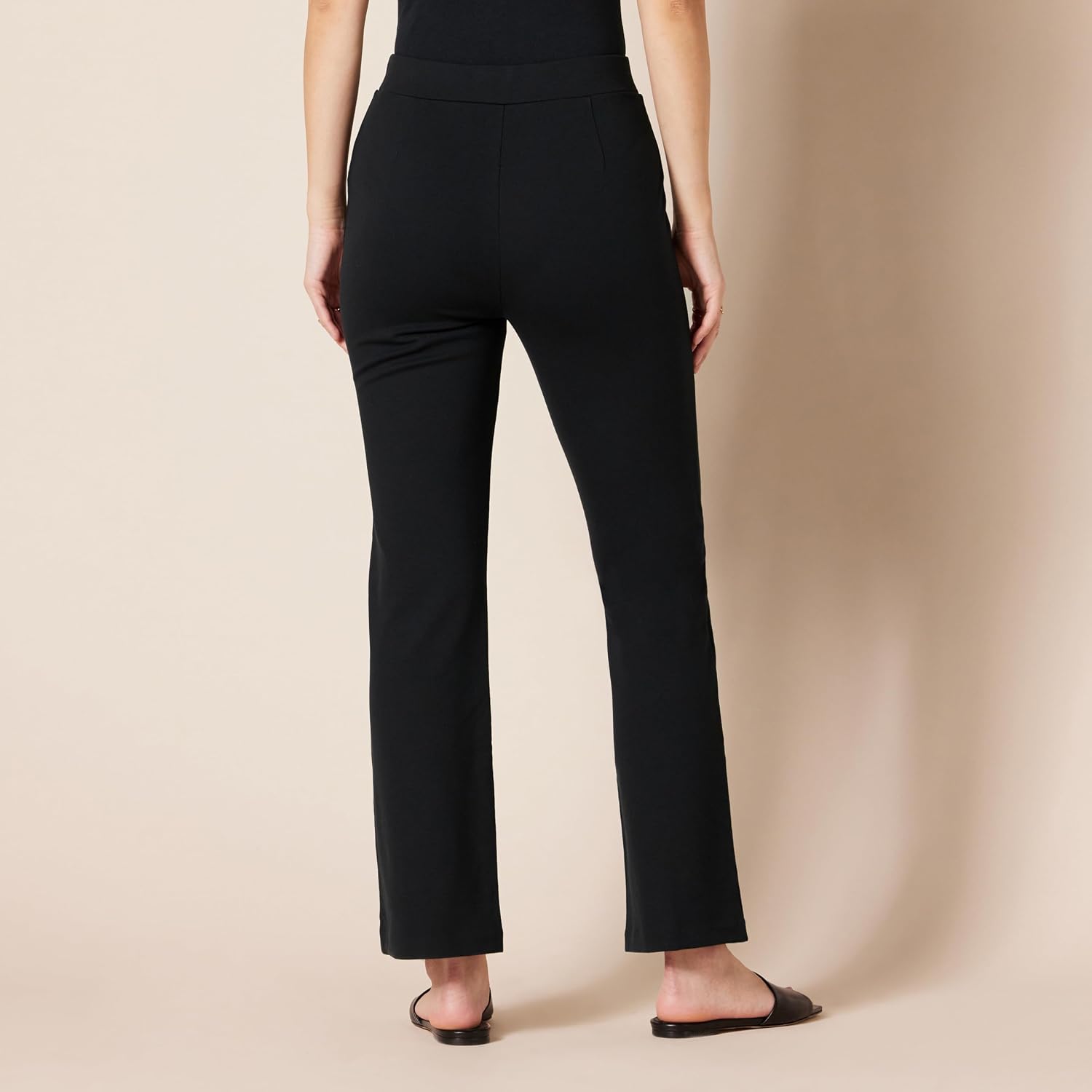
At this price, the fabric is doing one thing well: looking like ponte from a distance. The fiber blends tend to run heavier on polyester, often 70% or more, with a lower GSM (grams per square meter — the standard measure of fabric density; heavier means more body and structure) than mid-tier options. According to Refinery29’s article “Ponte Pants Are the Hardest-Working Piece in a Professional Wardrobe” (2025), entry-tier ponte tends to pill after 15–20 washes and can develop a subtle sheen under office lighting — what stylists sometimes call the “reflective problem,” where cheaper polyester bounces light in a way that reads as inexpensive even from across a conference table. Aggregated owner reviews also flag that the waistband elastic on entry-tier styles tends to lose its recovery faster, meaning the fit drifts over a season of regular wear.
That said, Who What Wear’s roundup “The Best Ponte Pants, According to Fashion Editors” (2025) identifies a handful of sub-$25 ponte styles — particularly Amazon Essentials straight-leg and Target’s A New Day ponte trousers — as genuinely strong performers for the price, especially when worn with a structured blazer that carries the formality load.
Amazon
$17.80
In stock on Amazon
Check price on AmazonMid-Tier: $35–$65
Typical brands: Banana Republic, Ann Taylor, J.Crew, Mango
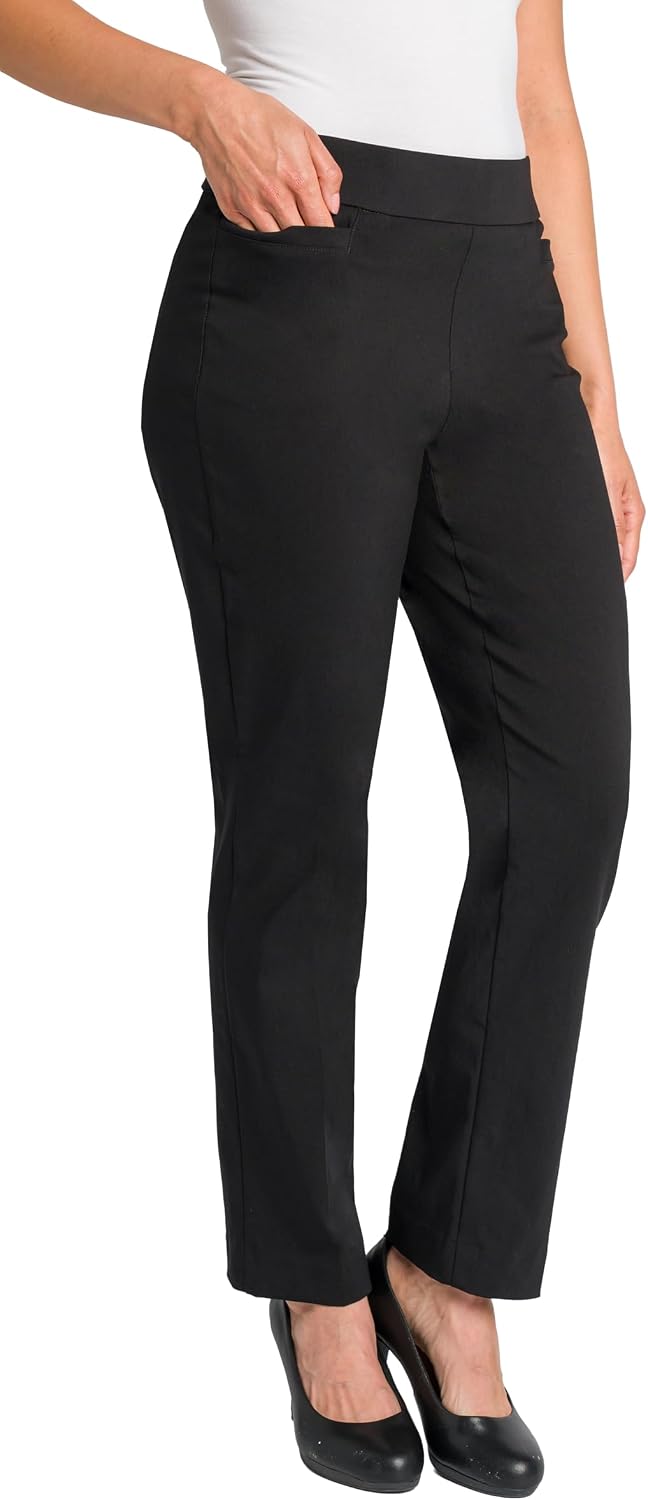
This is where construction starts visibly improving. Banana Republic and Ann Taylor in particular have built significant repeat-customer loyalty on their ponte styles, and owner feedback consistently cites two specific upgrades: a more stable waistband (usually a wider, banded construction rather than narrow elastic) and a finish that sits matte under light rather than shiny. The fiber blends at this tier typically bring rayon content up — rayon adds drape and kills the synthetic sheen — and some styles incorporate a small percentage of nylon for tear resistance at stress points like the inner thigh and seat seam.
Harper’s Bazaar’s “The Fabric Glossary Every Shopper Should Bookmark” (2024) notes that rayon-blend ponte “holds its structure through the workday without the stiffness of a woven trouser,” which is the exact trade-off professionals are chasing. At $45–$65, you’re also more likely to get a proper fly front (rather than a mock fly over an elastic waist) and a clean hem finish — details that signal tailoring intent even on a stretchy fabric.
Briggs
$29.99
In stock on Amazon
Check price on AmazonInvestment Tier: $120–$200+
Typical brands: Theory, Vince, COS, Reiss, MM. LaFleur
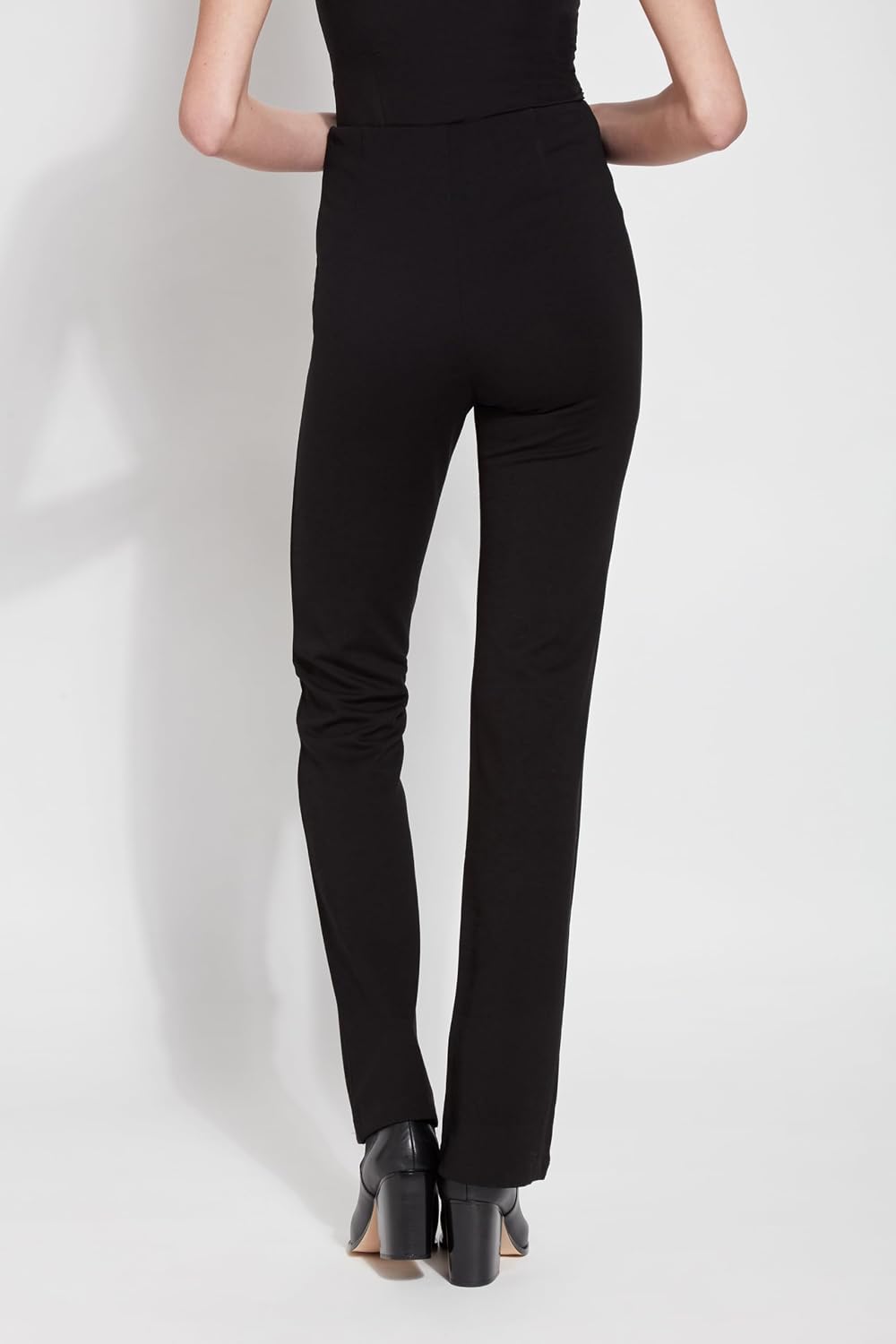
The price jump here is real, and the difference is not purely brand premium — though that’s part of it. Theory’s ponte fabric runs noticeably heavier and denser than mid-tier equivalents; owners consistently report that the pants hold a crease-free silhouette through a full workday in a way that cheaper ponte does not. Vince’s take on the fabric tends toward a slightly more fluid drape, appealing to the creative-office wearer who wants structure without rigidity. Business of Fashion’s 2024 analysis “Stretch Fabrications and the Rise of Performance Workwear” singled out this tier as the inflection point where “performance fabric stops reading as compromise and starts reading as intention.”
The construction differences are also meaningful: at this price point, you’re typically getting flat-felled seams (seams stitched flat to reduce bulk and extend longevity), fully lined legs in some styles, and waistbands interfaced to prevent rolling. The net result is a pant that looks intentional under a $400 blazer rather than fighting it.
Lyssé
$108.00
In stock on Amazon
Check price on AmazonBy the Numbers
| Price Point | Typical Fiber Mix | Key Upgrade Over Lower Tier | Expected Wear Cycles Before Visible Aging |
|---|---|---|---|
| $18–$25 | 70–78% polyester / 20% rayon / 5–8% spandex | Entry point; structure present, sheen risk high | ~30–40 washes |
| $40–$65 | 55–65% polyester / 28–35% rayon / 5–8% spandex | Matte finish, banded waistband, fly front | ~60–80 washes |
| $120–$200 | Mixed — often proprietary blends with nylon reinforcement | Weight, drape consistency, seam construction, longevity | ~100+ washes (owner-reported) |
Sources: aggregated owner reviews, published brand spec sheets, Who What Wear “The Best Ponte Pants, According to Fashion Editors” (2025), Harper’s Bazaar “The Fabric Glossary Every Shopper Should Bookmark” (2024).
Where the Money Actually Goes: Fit, Construction, and the Longevity Question
The most useful frame for this decision is not “which looks best day one” — entry-tier ponte can look genuinely polished on day one — but “which still looks intentional on day 200.”
Fit consistency over time is the clearest differentiator. The Cut’s workplace dressing guide “What to Wear to Work When the Dress Code Is Vague” (2024) flags that ponte pants are a category where “the seat and thigh tend to stretch out before the waistband does,” creating a fit that looks baggy in the legs but still feels snug at the waist. This happens faster in lower-fiber-weight ponte because there’s less structure to resist repeated stress. Owner feedback on mid-tier styles like Banana Republic’s Avery trouser and Ann Taylor’s Modern Fit Ponte consistently notes they hold shape through a full work week; investment-tier styles like Theory’s Thaniel pant accumulate reviews specifically praising multi-year durability.
Waistband construction is worth inspecting before buying at any tier. A hidden elastic waistband is fine and often comfortable; the issue is whether the elastic is encased in a banded structure (which stabilizes it) or just threaded through a channel (which allows bunching and rolling). At the entry tier, channeled elastic is standard. At mid-tier and above, you see more banded construction. If you’re wearing these to client meetings or industry dinners, the waistband silhouette under a tucked blouse matters more than it sounds.
The sheen problem is real and worth taking seriously. Refinery29’s “Ponte Pants Are the Hardest-Working Piece in a Professional Wardrobe” (2025) notes that the polyester-heavy fabrics common at the entry tier catch light differently than higher-rayon-content versions — particularly under the fluorescent or LED overheads common in offices. In a video call or a brightly lit conference room, that sheen can undercut an otherwise polished look. If your environment is high-visibility, this is the single strongest argument for moving up a tier.
The Tradeoff Decision: Which Tier Is Actually Right for You?
Here’s the decision logic, stated plainly.
If you’re building a first professional wardrobe or rotating into a new role and need immediate coverage: Entry-tier ponte from Target A New Day or Amazon Essentials gives you a functional, polished-at-a-glance option while you assess your actual dress-code environment. Buy two pairs, rotate them, and re-evaluate in six months. The $36–$50 total spend is a reasonable scouting cost.
If you’re six months in and you know this is a wardrobe anchor: Mid-tier is the right home base. At $45–$65, Banana Republic, Ann Taylor, and J.Crew offer construction that holds up over 80-plus wash cycles, matte finishes that read cleanly on video, and fit profiles that work under blazers without adding bulk. Who What Wear’s editors, in their 2025 roundup, consistently return to Banana Republic’s Avery ponte trouser as a best-in-tier pick, specifically for its waistband stability and the way it sits flat under a structured jacket.
If you’re dressing for client-facing or high-stakes environments regularly — or if you’ve watched a lower-tier ponte get visibly tired after a season: Investment tier earns its price through longevity math. A $148 Theory ponte trouser that lasts four years of weekly wear at roughly 200 cycles costs significantly less per wear than a $45 pant replaced every 18 months. Owner-reported data consistently supports the durability claim at this tier. MM. LaFleur is worth calling out as a mid-investment option — their ponte styles run $90–$120 and draw consistent praise in aggregated reviews for fit precision and fabric weight, sitting between true mid-tier and full investment.
If you’re in a creative or startup environment where the visual register is less formal: COS ponte styles are worth evaluating. COS cuts tend toward a slightly wider, more architectural leg than traditional workwear brands, which reads as intentional and fashion-forward rather than corporate. The fit language at COS runs roomy — their “relaxed” is genuinely relaxed, unlike J.Crew’s “relaxed,” which sits closer to what most brands call “straight.” Size up only if you want the COS drape; size true if you want a closer fit.
One Practical Note on Care
Ponte longevity is highly care-dependent at every tier. Owners who machine wash cold and hang-dry consistently report dramatically longer fabric life than those who tumble dry — the heat accelerates elastic degradation and fabric pilling regardless of price. At the investment tier, hand wash or dry clean is the manufacturer recommendation on most styles and is worth following. The cost-per-wear math on a $148 pant only holds if the fabric is still intact at wash 150.
The bottom line: ponte pants are one of the few categories where moving one tier up is almost always worth it once you’ve confirmed you’ll actually wear them regularly. The entry tier is a reasonable proving ground. The mid-tier is where most professionals should anchor. And if you’re in rooms where details get noticed, the investment tier pays for itself — but only if you treat it accordingly.