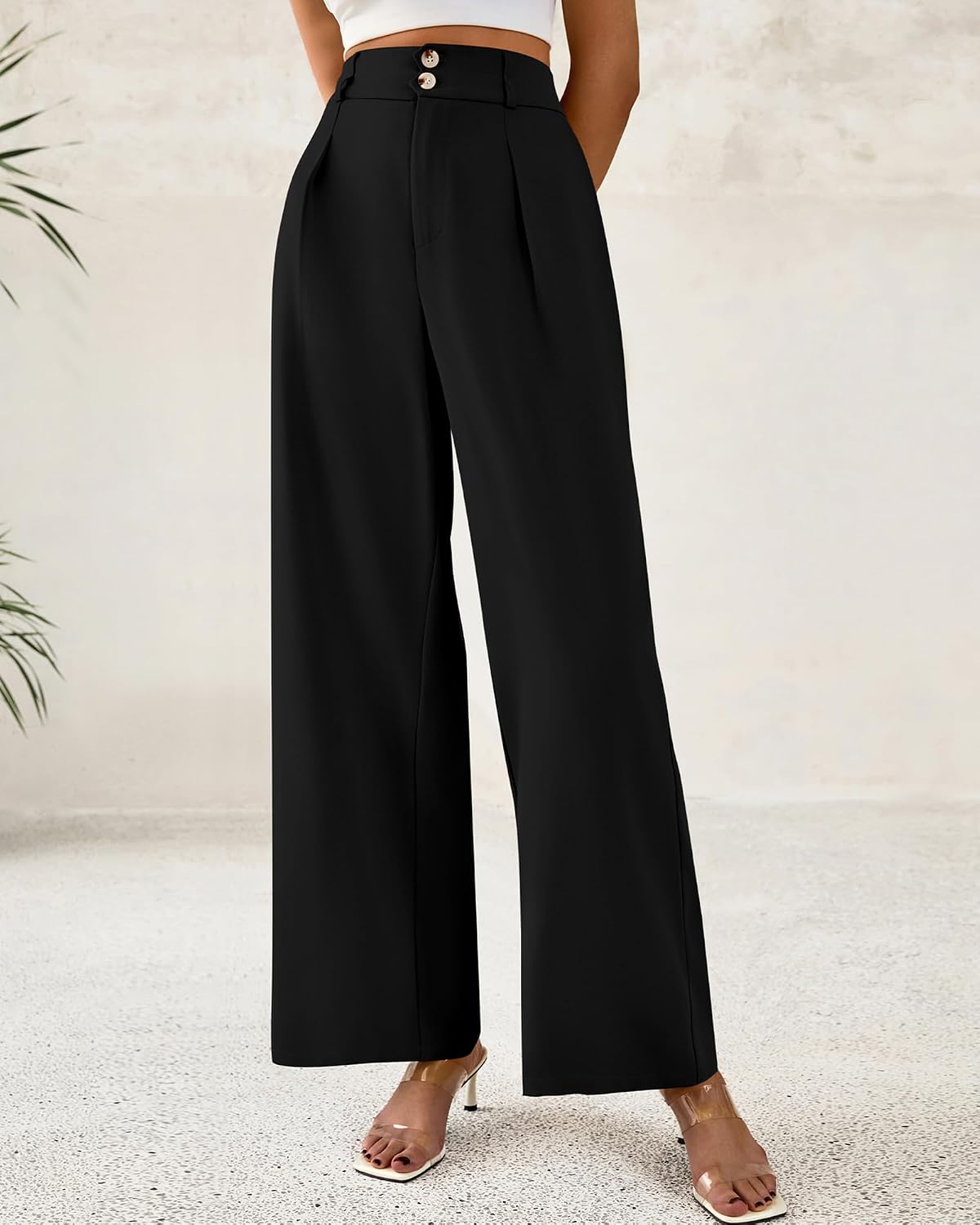
Wide-leg dress pants — trousers cut with a noticeably broad, floor-grazing or ankle-length leg opening rather than the tapered or slim silhouette that dominated office dressing for the last decade — have moved from editorial runways into real professional wardrobes at a pace that’s outrun most workplace dress-code language. That gap is the problem. Your company’s written policy probably still says “tailored trousers” without specifying what that means, which means you’re making a $150-to-$500 decision with incomplete information. This guide helps you close that gap. We’ll walk through how to read your actual dress code environment (not just the PDF in the HR portal), what fabrication and construction signals separate a wide-leg trouser that reads professional from one that reads beach vacation, and how to match your spend to your office context — so you buy with confidence and wear with authority.
| EDITOR'S PICK[iChosy Womens High Waist Wide S…](https://www.amazon.com/dp/B0FC1JJ214?tag=greenflower20-20) | Mid-tier[Woman Within Plus Size Stretch…](https://www.amazon.com/dp/B078C84N79?tag=greenflower20-20) | Budget pick[DLOODA Womens Bootcut Dress Pan…](https://www.amazon.com/dp/B0DN6PZVTY?tag=greenflower20-20) | |
|---|---|---|---|
| Fit type | Straight leg | Wide leg | Bootcut |
| Waist style | High waist | — | High waist |
| Closure | — | Pull-on | Pull-on |
| Pockets included | ✓ | — | ✓ |
| Material stretch | — | Stretch (ponte knit) | Stretchy |
| Size range | 16 | 14 W | X-Large |
| Price | $39.99 | $28.99 | $19.99 |
| See on Amazon → | See on Amazon → | See on Amazon → |
Why Wide-Leg Trousers Are a Legitimately Tricky Office Call Right Now
The silhouette isn’t new — palazzo pants and wide-leg cuts have cycled through fashion for decades — but the current iteration sits in an interesting middle zone. It’s tailored enough to appear on the floor of consulting firms and law offices, yet relaxed enough that a poorly chosen version can read as casualwear. The difference is almost entirely in the details: fabric weight, structure, rise, and hem finish.
Vogue’s coverage of the trend as recently as 2025 noted that the wide-leg trouser has become the dominant alternative to the classic straight-leg suit pant in professional contexts, particularly as hybrid work schedules have softened what “formal” means Monday through Thursday. Harper’s Bazaar echoed this, pointing to the rise of high-waisted, fluid wide-leg trousers in suiting-adjacent fabrics as a sign that the silhouette has earned genuine professional credibility — with the caveat that styling choices carry enormous weight.
What this means for you as a practitioner-level shopper: the market has expanded dramatically, and price alone does not reliably predict whether a wide-leg trouser will survive your dress code. A $180 pair from COS in a heavyweight ponte (a dense, double-knit fabric that holds its shape without lining) can read sharper than a $320 pair in a drapey viscose blend from a mid-tier brand. You need to evaluate the garment, not just the price tag.
The tradeoff you’re actually navigating: Structure vs. movement. Wide-leg dress pants live and die by how much the fabric controls the silhouette. More structure = safer for conservative environments. More movement = better for creative offices and client dinners, but riskier in rooms that still value formality signals.
How to Actually Read Your Office’s Dress Code
Most dress-code policies in 2026 fall into one of three real-world categories, regardless of what they call themselves. Knowing which one you’re in tells you which version of the wide-leg trouser to buy — or whether to buy at all.
Category 1: Business formal or traditional business professional Think financial services, law, corporate banking, and certain government-adjacent consulting roles. The written policy often says “professional attire” or “business formal.” The unwritten norm is that deviation from the slim or straight-leg pant still draws attention. In these environments, a wide-leg trouser can work — but only in a heavier, fully structured fabric (wool or wool-blend suiting weight, ideally lined) with a clean, minimal silhouette and a high rise. Anything that drapes dramatically or flows when you walk is a risk. Business of Fashion’s 2024 analysis of shifting norms in financial services noted that even as dress codes have relaxed, client-facing roles tend to lag internal teams by 12-18 months. Treat that as a margin of caution.
Category 2: Business casual or smart casual This is where most hybrid-office professionals now live. “Business casual” technically means professional enough for the office, relaxed enough to skip the jacket — but in practice it spans everything from Zoom-polished to nearly casual. Wide-leg dress pants are well within range here, provided you’re pairing them intentionally. A structured wide-leg in a ponte or gabardine (a tightly woven, twill-weave fabric with natural crease-resistance) with a tucked blouse or a fitted knit top is broadly appropriate. The fabric and the silhouette are doing the work of signaling “this is a deliberate outfit choice,” not “I grabbed what was comfortable.”
Category 3: Creative or startup casual Agency environments, design studios, tech companies with minimal dress code language — here, the wide-leg trouser is almost a default option rather than a bold choice. Who What Wear has tracked the silhouette as a consistent presence in creative-industry dressing since at least 2023, and Refinery29 has specifically noted its adoption by women in senior creative roles as a power-dressing alternative to the traditional blazer-and-slim-pant combination. In this category, you have real latitude on fabric and drape — including the more fluid, movement-forward interpretations.
The Diagnostic You Should Run Before You Buy
Before you open a brand’s website, answer three questions:
- What does your manager (or the most senior woman in your immediate team) wear to in-person client meetings? That’s your effective dress code ceiling, not the HR document.
- Does your workplace have a “presentation day” shift — where people visibly dress differently when clients or leadership are in the building? If yes, you need a wide-leg trouser that can survive both registers.
- Are you buying for internal meetings, external-facing work, or both? A trouser that works perfectly for your open-plan office day may need a blazer or structured top to hold up in a client room.
What to Look For in the Fabric and Construction (and What to Skip)
This is where the decision tree branches hard. Wide-leg trousers at different price points differ in ways that matter directly to professional wearability — not just longevity.
By the numbers: What price tiers typically deliver
| Price range | What you’re likely getting |
|---|---|
| $80–$150 | Polyester-blend or viscose; minimal lining; may lose shape by midday |
| $150–$280 | Ponte, gabardine, or stretch-wool blend; often unlined but structured; good for Category 2–3 offices |
| $280–$500 | Wool, wool-crepe, or wool-blend with lining; holds press; appropriate for Category 1–2 |
| $500+ | Suiting-weight wool or technical fabric; investment-tier; multi-year wear |
Fabric signals to prioritize:
- Ponte or double-knit ($150–$250 range, brands like COS, Banana Republic, Club Monaco): Reviewers consistently note that ponte wide-legs hold their shape across a full workday without ironing, making them a strong entry point for Category 2 environments.
- Wool crepe ($280–$500, brands like Reiss, Massimo Dutti, Theory): A fabric that drapes with weight rather than floating — this is the sweet spot for a wide-leg that reads structured. Theory’s ponte and wool-crepe options consistently come up in aggregated reviews as workhorses that bridge business casual and business professional contexts.
- Viscose or Tencel blends ($120–$250): Beautiful movement, but reviewers frequently flag that these lose their press by afternoon and can wrinkle badly in transit. Fine for a creative office where you’re not moving between meetings, riskier if your day involves a lot of standing and sitting.
- Suiting-weight wool or wool-silk blends ($400–$900+, brands like Joseph, Vince, Brunello Cucinelli diffusion): This is where wide-leg becomes genuinely interchangeable with a traditional suit trouser in terms of professional read. Owners of Joseph’s wide-leg suiting trousers in particular note that the structured waistband and clean leg line allow them to wear the style in client-facing contexts where they’d normally reach for a straight-leg cut.
Construction details that matter:
- Waistband structure: A wide, stiffened waistband signals tailoring. An elasticized or soft waistband signals casualwear, regardless of fabric.
- Hem finish: A clean, weighted hem (particularly a blind hem or a turned cuff) reads more formal than a raw or casual finish. This is a detail that often differentiates $200 from $350 in the same category.
- Lining: Lining adds weight, structure, and keeps the trouser from clinging. It’s not mandatory for all office contexts, but in a Category 1 or high-stakes Category 2 environment, an unlined wide-leg in a lighter fabric is a risk.
The Styling Math: When the Trouser Does the Work, and When You Have to
Wide-leg dress pants carry more visual weight than slim trousers — literally and figuratively. The silhouette draws attention, which means the rest of your outfit needs to be intentional rather than passive.
The reliable frameworks across office contexts:
- Tucked, fitted top + wide-leg trouser: This is the proportion balance that works in every category. The fitted top (blouse, knit, or structured shell) establishes that the volume below is deliberate. Harper’s Bazaar has consistently cited this as the most office-appropriate wide-leg formula.
- Cropped or fitted blazer + wide-leg: The blazer shortens the top half visually, which lets the wide-leg read as a considered silhouette choice rather than excess fabric. This combination works from Category 2 all the way through a client presentation in a Category 1 environment.
- Oversized or flowy top + wide-leg: This combination reads stylish in a creative office and potentially reads sloppy in a traditional one. It’s a context-dependent call, not a universal no — but it’s where most wide-leg missteps happen.
Footwear impact is significant: A wide-leg trouser that hits at the ankle or floor reads sharper with a pointed-toe flat, a block-heeled mule, or a low-profile loafer. A rounded-toe flat or a sneaker can undercut the professional register, even with an otherwise polished outfit. Reviewers across Who What Wear and Vogue’s styling coverage consistently reinforce this point: the shoe anchors the silhouette.
The Decision Rule
If your office falls in Category 1 (traditional business professional): buy in wool or wool-crepe, with a structured waistband, at the $280+ tier. Pair exclusively with tucked tops or fitted blazers. Budget for tailoring — hem length is critical for wide-leg trousers, and an off-the-rack hem will undercut an otherwise appropriate look.
If your office falls in Category 2 (business casual): the $150–$280 range in ponte or gabardine gives you strong value-to-professional-read ratio. COS, Club Monaco, Banana Republic, and Massimo Dutti all have options in this range that reviewers rate highly for day-to-night flexibility. You don’t need to invest at the wool-suiting tier unless you’re regularly presenting to clients or leadership.
If your office falls in Category 3 (creative or startup casual): you have real latitude. The wide-leg trouser in a fluid fabric, styled with a relaxed tuck or even a longer knit, is entirely appropriate. This is also where resale value becomes a useful metric — styles you buy at the $180–$280 range from brands with strong secondhand markets (COS, Theory, Vince) hold enough value that trying a trendier cut carries less financial risk.
The one universal rule: Before any wide-leg trouser enters your professional rotation, run the proportions test in a full-length mirror. Volume at the bottom requires intention at the top. If the outfit reads “comfortable” rather than “considered,” the trouser isn’t the problem — the styling is. Adjust the top half first before blaming the cut.