A blazer — in the workwear sense, a structured or semi-structured jacket designed to look intentional over a work outfit rather than purely casual — is one of the most load-bearing pieces in a professional wardrobe. It’s what turns a simple top into a meeting-ready look, and it’s often the first thing a colleague or client registers. The problem is that blazers span an enormous price range, and the jump between a $23 rack find and a $50 “investment” option isn’t always obvious at a glance. This guide maps exactly what changes at each price point — fabric weight, internal structure, seam quality, and visible finish — so you can make a decision based on what you actually need, not on optimism or anxiety. Whether you’re outfitting a new role on a tight budget or deciding whether to stretch your spending, you’ll leave with a clear framework for spending confidently at any tier.
Why Construction Details Matter More Than Price Tags
Before getting into tiers, it helps to understand the three variables that separate a blazer that reads “polished” from one that reads “costume”: structure, fabric, and finish.
Structure refers to what’s happening inside the jacket — whether there’s any interfacing (a stiff inner layer fused or sewn between the outer fabric and the lining that holds the jacket’s shape), shoulder padding, or canvas (a traditional tailoring material hand-sewn inside a jacket front to give it a living, natural drape). At lower price points, most blazers are either fully unstructured or use fused interfacing, which is cheaper and prone to bubbling after repeated dry cleaning. At higher price points within the budget range, you see more reliably applied fusing with greater coverage across the jacket front.
Fabric at the budget tiers we’re discussing is almost universally synthetic or synthetic-blend — polyester, viscose, and nylon dominate. The differences that matter are weight (heavier fabrics drape more naturally and wrinkle less aggressively), hand (how the fabric feels against your palm — papery versus substantial), and recovery (whether it bounces back after sitting or bunching).
Finish covers every external signal of quality: straight topstitching, cleanly mitered corners on pockets, buttons that don’t feel hollow, lapels that lie flat rather than flipping open. These are the details that separate a blazer that photographs well from one that holds up in person.
With that vocabulary in place, here’s what the three price tiers actually deliver.
The Three Tiers, Broken Down
The $23 Tier: A Blazer-Shaped Garment
At $23 — think entry-level Amazon Essentials options or clearance-rack fast fashion at major chain retailers — you are buying a blazer-shaped garment. That’s not a dismissal; it’s a precise description.
What reviewers consistently report at this tier:
Across buyer reports aggregated by Who What Wear (“The Best Blazers for Work, Tested by Style Editors,” 2025) and Refinery29 (“Work Blazers That Actually Look Expensive,” 2025), the pattern at sub-$25 price points is predictable: these blazers photograph well and serve lower-stakes moments — a Zoom background, a one-off presentation, casual Fridays in a relaxed office — but they show their construction quickly. Lapels tend to flip rather than lie flat. Fabric often feels lightweight and slightly shiny — the kind of polyester that reflects light in ways that read as inexpensive in person, even if the silhouette holds up in photos.
Construction reality at $23:
- Interfacing: Almost always fused and minimally applied, concentrated at the lapel zone rather than the full front panel. The jacket may feel structured in the store but loses its shape after washing or dry cleaning.
- Lining: Partial or absent. Where lining exists, it’s typically thin and tacked at minimal points, causing the jacket to bunch under a bag strap or seat belt.
- Pockets: Usually decorative — they appear functional but aren’t actually usable without distorting the jacket’s shape.
- Buttons: Lightweight, often with a slight hollow feel when pressed.
The honest use case: A $23 blazer earns its place when the situation is genuinely temporary — a single interview before you know whether you’ll need ongoing office attire, a one-season role with a very casual dress code, or a “just in case” layer for conference travel. As The Cut noted in “The Office Blazer Comeback Is Real — Here’s How to Shop It” (2025), budget-tier picks serve well as “styling tools rather than wardrobe investments” — the distinction is useful and worth internalizing.
The risk: Wearing this tier to client meetings, high-stakes interviews, or any in-person context where someone will be looking closely. At close range, the fabric sheen and lapel behavior read as fast fashion.
 product image](/images/external/65dd69cb2beb.jpg)
Ahlaray
$22.79
In stock on Amazon
Check price on AmazonThe $44 Tier: Where Construction Gets Honest
The $44 range — covering Amazon Essentials’ better-reviewed styles, H&M’s workwear line, and Walmart’s Time and Tru elevated picks — is where the first meaningful jump happens. It’s not dramatic, but it’s measurable in daily wear.
What changes at $44:
At this price, fabric weight typically increases. You’re still in polyester-blend territory, but the blend more often includes viscose or rayon, which improves drape and reduces the synthetic sheen that plagues the $23 tier. Refinery29’s 2025 budget blazer roundup (“Work Blazers That Actually Look Expensive”) specifically called out the difference in “how the lapel behaves” between sub-$30 and the $40–$50 range — at the higher end, lapels are more likely to have been cut with enough structure to stay flat rather than curling outward.
Construction at $44:
- Interfacing: Still fused, but with more coverage — typically the full front panel rather than just the lapel zone. This translates to a jacket that maintains its shape longer through a workday.
- Lining: More consistently present and better-anchored, which means cleaner movement when you sit or reach.
- Seams and topstitching: More consistent. Not perfect, but the margin of error visibly shrinks.
- Pockets: A higher percentage of $44 blazers include at least one functional interior pocket even when exterior pockets remain decorative.
Comparison at a glance:
| Feature | $23 Tier | $44 Tier | $50 Tier |
|---|---|---|---|
| Interfacing coverage | Lapel zone only | Full front panel | Full panel + collar |
| Lapel lie-flat reliability | Low | Moderate | High |
| Lining quality | Partial or absent | Present, basic anchor | Full or near-full |
| Button weight | Hollow, light | Moderate | Weighted, matte finish |
| Shape retention after 10 wears | Noticeable softening | Holds reasonably | Consistent across season |
Ahlaray
$22.79
In stock on Amazon
Check price on Amazon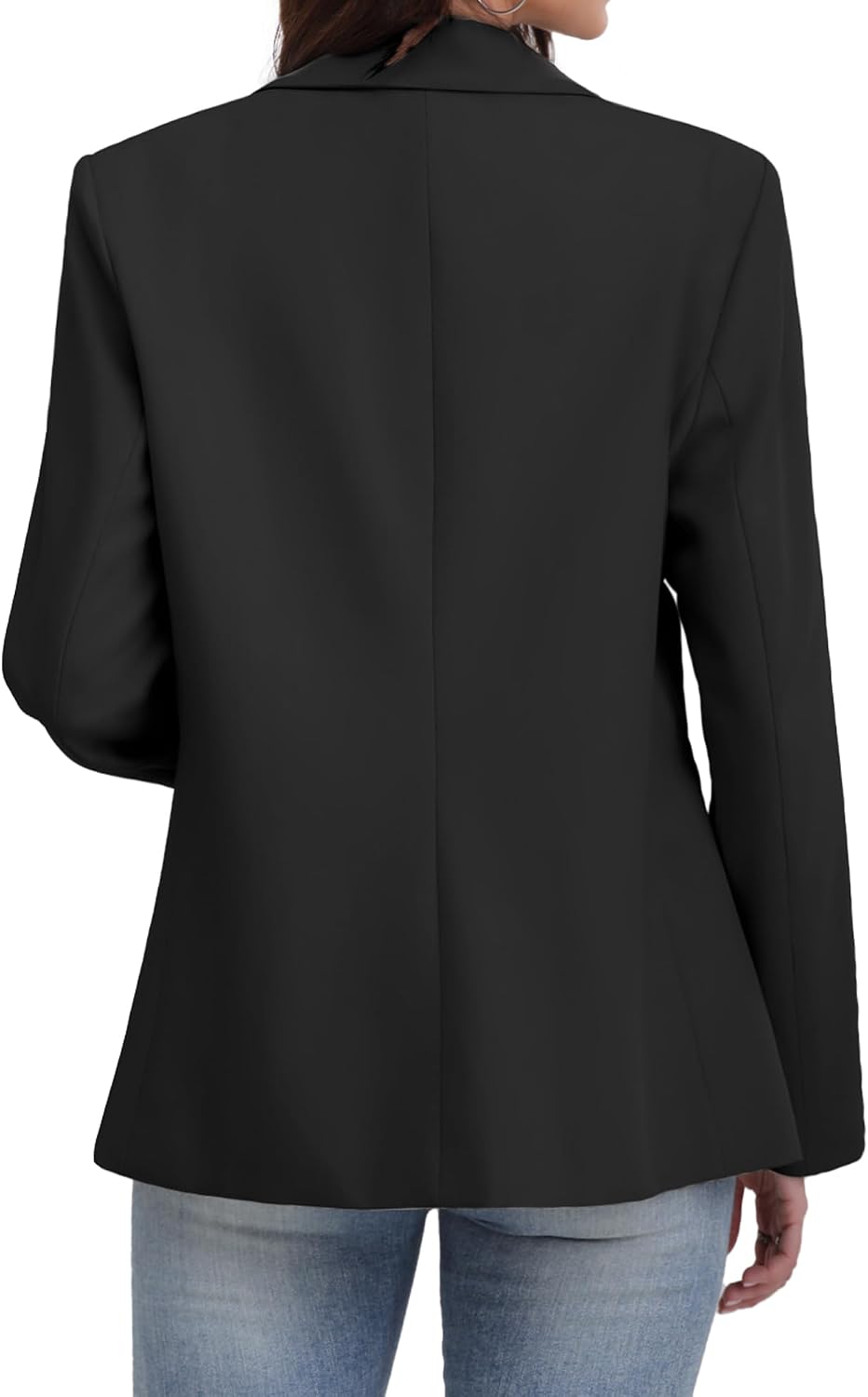
ELLEVEN
$42.51
In stock on Amazon
Check price on Amazon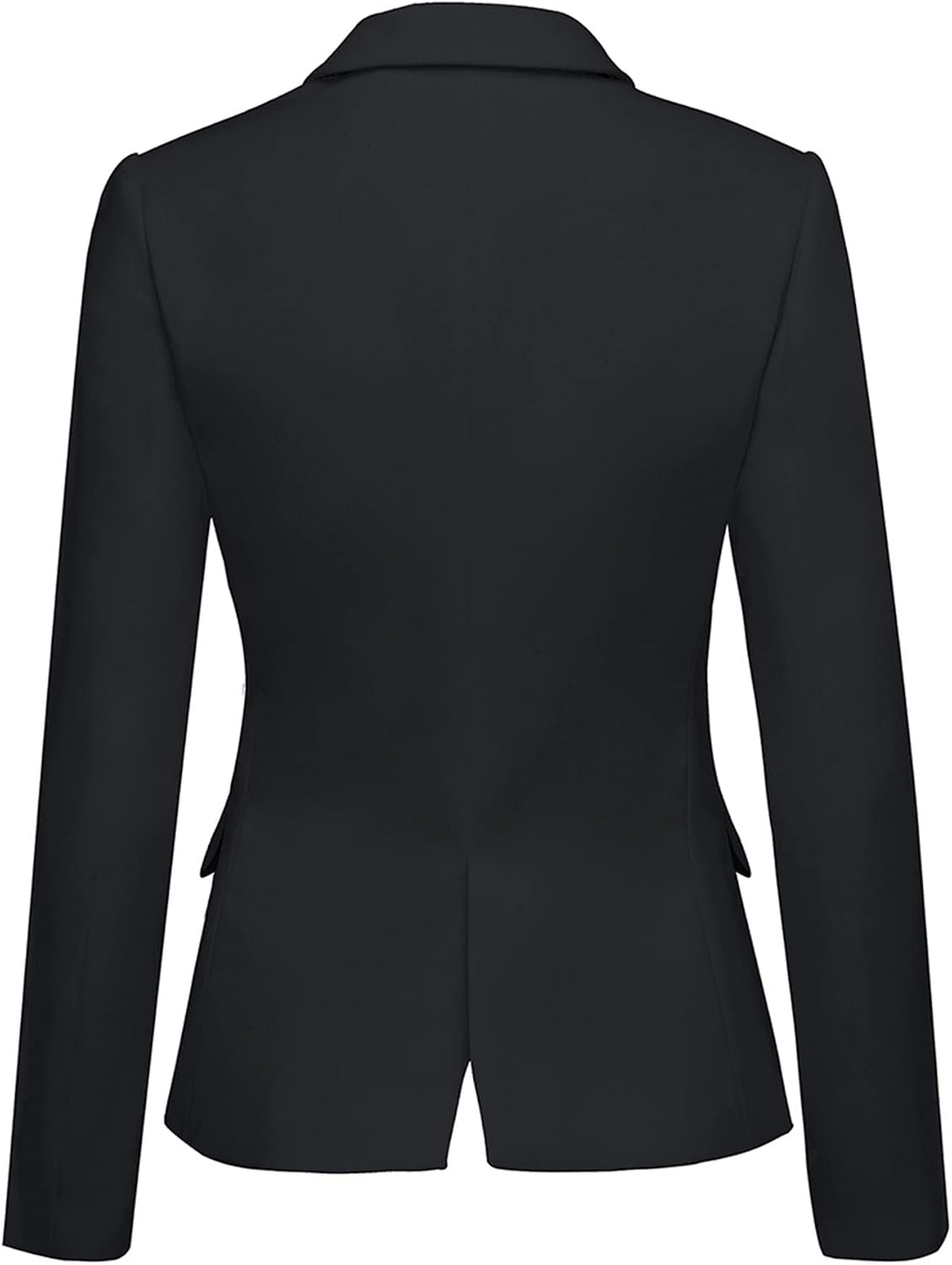
LookbookStore
$49.95
In stock on Amazon
Check price on AmazonThe patterns in the table above reflect aggregated buyer findings reported by Who What Wear (“The Best Blazers for Work, Tested by Style Editors,” 2025) and Harper’s Bazaar (“How to Buy a Blazer That Fits,” 2024) — directional consensus rather than laboratory measurement, but consistent across large review pools.
The honest use case: The $44 tier is the practical floor for regular office wear. If you’re in a hybrid environment where you’re in-person two to three days a week and your blazer is being seen repeatedly by the same colleagues, $44 is where you stop apologizing for what you’re wearing. It won’t satisfy a fashion-forward creative director’s eye, but it reads as professional in most business-casual contexts.
ELLEVEN
$42.51
In stock on Amazon
Check price on AmazonThe $50 Tier: The Polish Threshold
At $50 — which covers the upper end of H&M’s workwear blazers, select Banana Republic Factory pieces on sale, Vince Camuto entry-level styles at department stores, and some Zara suiting options — something shifts in how a blazer reads in person.
The difference isn’t dramatic by any single metric, but it compounds. Fabric weight tends to increase again, and at this price point you’re more likely to encounter a twill weave (a tighter diagonal fabric structure that resists wrinkling better than a plain weave) or a structured ponte knit (a firm, stable fabric that behaves like woven suiting but has slight stretch, making it far more forgiving across body movement). Harper’s Bazaar’s 2024 blazer-buying guide (“How to Buy a Blazer That Fits”) specifically recommends ponte blazers for professionals who “need structure without restriction” — a description that maps precisely to this price range.
What $50 buys in construction:
- Interfacing: Full front panel plus collar, which is the threshold where jacket collars stop curling and start lying clean against a shirt or blouse.
- Buttons: Noticeably heavier and with a matte finish that reads as intentional rather than incidental. Not horn or shell (those appear well above $200), but not hollow.
- Lining: Full or near-full, which changes how the jacket moves over your body. A fully-lined blazer slides over layers rather than catching on them — a detail that becomes obvious in motion.
- Shoulder construction: More consistent padding or structured seaming. Shoulders are the most visible single signal of a jacket’s quality, and at $50 they typically sit cleanly rather than slumping or drifting.
What editorial coverage says about this range:
Business of Fashion’s 2025 workwear analysis (“Workwear’s Quiet Upgrade”) characterized the $50–$80 range as the “polish threshold” for mass-market professional dressing — the point where construction quality becomes consistent enough to anchor a client-facing wardrobe rather than merely supplement one. That framing is accurate to what the construction details bear out: at $50, you’re buying a jacket that holds its intention across a full workday rather than fading by afternoon.
The honest use case: $50 is where you buy if you’re wearing this blazer more than twice a week, if you’re regularly in front of clients or senior stakeholders, or if your industry has any baseline expectation of visible polish — finance, law, consulting, client services, corporate communications. It’s also the tier most worth hunting on sale: a $50 Banana Republic Factory blazer at $38 represents a different value proposition than the same jacket at full price. At $50, you’re buying your workhorse.
LookbookStore
$49.95
In stock on Amazon
Check price on AmazonThe Decision Rule
The three tiers map cleanly to three use cases, and the honest framework is this:
If the use case is occasional or truly budget-constrained — a single interview, a one-off event, a very casual office — the $23 tier delivers real value with open eyes about the tradeoffs. Don’t overspend for situations that don’t warrant it.
If the use case is regular hybrid-office wear in a business-casual environment where the same colleagues see you week after week, $44 is the practical floor. Below that, you’ll be spending on replacements faster than the math works out.
If you are client-facing, interviewing at mid-to-senior level, or working in an environment where polish is read as competence, $50 is your minimum. And it’s worth watching for sales in the $70–$100 range — that’s where construction quality jumps again, with better lining fabric, more reliably canvassed shoulders, and buttons that genuinely look like they belong on the jacket.
The gap between $23 and $50 is $27. Spread across a year of three-times-weekly wear, the per-wear cost difference is negligible. The difference in how a $50 blazer behaves in the room — lapels flat, shoulders set, fabric weighted — is not.
If-then summary:
- If occasional or budget-constrained → then $23, with clear-eyed expectations.
- If regular hybrid wear in a casual-to-business-casual setting → then $44 as the practical minimum.
- If client-facing, high-stakes interviews, or appearance-conscious industry → then $50 minimum, and watch sales for the next quality jump at $70–$100.
The purchase decision, ultimately, is not about price. It’s about matching construction quality to the stakes of the room you’re walking into.